Observations While Traveling Down the Road of Aging

Category: Aging (Page 1 of 8)

Dolly Parton’s Untimely Death

September 2026

By Richard Fleming

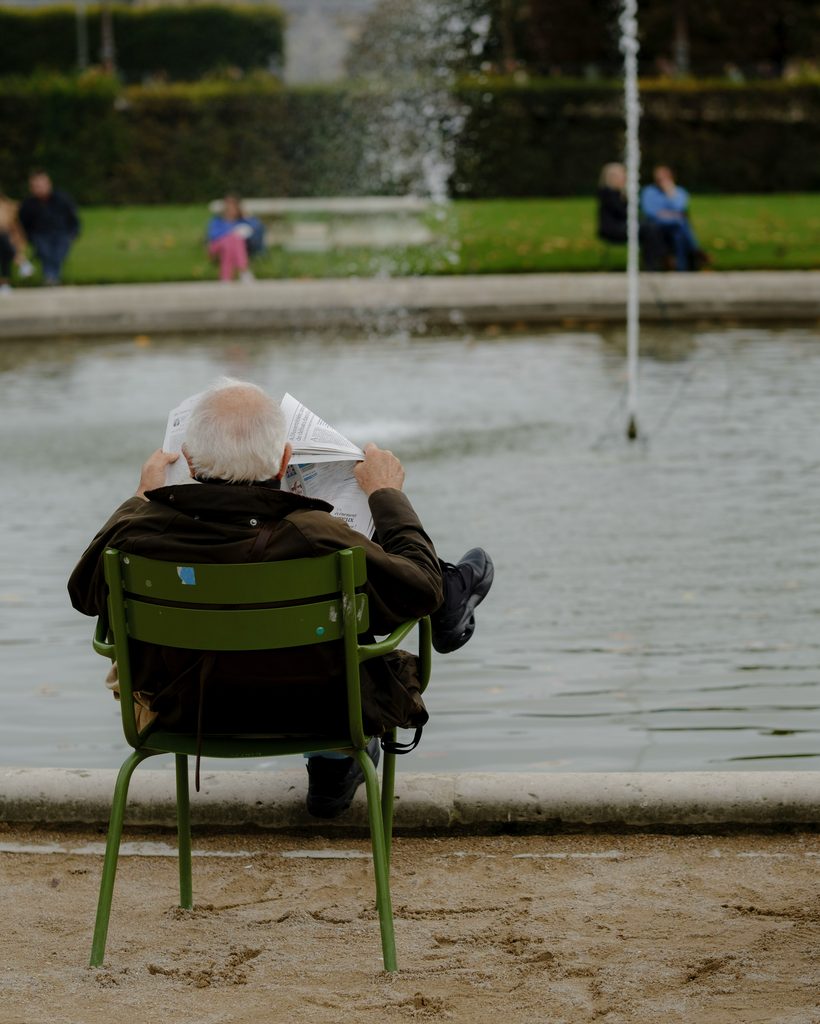
Photo courtesy of Matt Benson

News and media channels were filled with tributes and heartfelt testimonials about Dolly Parton in the days after her death from cancer August 25. To be honest, I have only a limited familiarity with her history and career. I know maybe ten of the almost 1,000 songs she recorded. But after she passed I consumed a fair number of stories about her work and legacy. Whenever an iconic figure dies, I find it interesting and informative to learn more about them.

Dolly Parton lived a remarkable life. She was empathetic. She was kind. Clearly, she was quite talented. And she was altruistic. It was not until after she died that I learned about her program to provide books to young people. Marc, one of my elementary school friends, texted some of us old-timers from Topeka that Dolly Parton sent books to his nephew every month. It was the first time I heard about Imagination Library, Parton’s organization which gives books to one out of every seven children in the U.S. under age 5. Truly remarkable.

These qualities – empathy, kindness, talent, and altruism – are sorely lacking among many public figures in our country today, and they account for why Dolly Parton’s death made such an impact across the country.

But as I read stories about Dolly Parton’s career and watched some TV programming looking at her life, one aspect that received scant attention was her age of death. Although never stated openly, the underlying presumption seemed to be, “It’s not unreasonable to die at age 80.” Perhaps. But in my view, her death came too soon.

In this post I want to briefly delve into the issue of what makes a death untimely. In doing so, I am focusing on what might be called “natural” deaths – deaths that occur due to the aging process. Our bodies naturally wear down and wear out. There are myriad causes of natural death: cancer, heart disease, infections, dementia, organ failure, and others. And natural deaths occur at a wide variety of ages.

Sadly, many people, far more than should be the case in a developed country, die of “unnatural” causes: gun violence, drug overdose, poverty, preventable infectious diseases, and others. Every unnatural death is untimely. Each is premature, unfortunate, and unnecessary.

*    *    *

So what makes Dolly Parton’s passing at age 80 untimely?

It was a natural death, from the information that has been made available. I readily acknowledge that people aged 80 are seriously old. They are far beyond middle age. But as I accumulate more birthdays, I look at the timing of natural death through a different lens. At 75 years of age I still feel reasonably lively. While I don’t have the same energy and strength I had five years ago, the idea of reaching age 80 seems a doable proposition. From my current vantage point, I’m optimistic that at age 80 I will still feel engaged with life and able to enjoy my daily activities. So nowadays when I hear of someone dying at age 80, my first thought is, “Dang! That’s kind of young.”

I acknowledge I view the timing of natural death with an age-related bias. I understand why many young people – let’s say folks under age 60 – don’t view Dolly Parton’s age of death to be notable. For them, people at age 80 are as old as the hills and twice as dusty. It’s time to say good-bye. I get it.

But I also know that as these young folks journey forward into their 60s and 70s, their outlook will change. Age 80 will begin to look different. It will not be that far off. It will not seem like a reasonable age to give up the ghost if one is living a good life.

Dolly Parton herself did not take feel it was time to wrap things up. Four days before she died, she said in an interview, “I still have so many things I want to achieve, so I’m gonna keep on working as long as I can to see everything come to life.” Unfortunately, “as long as I can” ended up being four more days. This is the definition of an untimely death.

*    *    *

Demographic data can offer perspective on how to view 80 years of age. A female born today in the U.S. has an average life expectancy of 81.4 years. A woman currently aged 65 can expect to live, on average, to age 85. (Men typically die about five years younger than women.)

So I feel it is appropriate to point out that Dolly Parton died at an unseasonably early age. She was still living life to the fullest. But it appears it will only be us old folks who lament this aspect of her passing.

To be clear, I am not saying dying at age 80 is a tragedy or inappropriate. Nor do I feel we should all aim to live to that age, or to 90 or beyond. We all pass on at some point. And many folks experience a natural death much younger than age 80, often for reasons totally beyond their control. When our time comes, it comes. And when this happens, it will always create a feeling of loss among those left behind.

*    *    *

Actually, as I think about it, almost every death is in some sense untimely. There is no “right” time to die. More importantly, there are “right” ways to live before our time comes. The value of life is not determined by how many birthdays we attain. It is best assessed by the quality of the life we lead. Is our health reasonably sound, without too much pain, fatigue, and stress? Are we able to enjoy our days? Are we able to make life better for our family? Can we spend time with friends? Are we able to keep learning, and continue contributing to our community and society? These are good measures to assess our years as we grow old. And if we live life like this, our death will always be “untimely,” no matter our age.

Dolly Parton did not write songs about death and dying. Her music dealt with the joys and challenges of living. But she knew what the future holds for each of us. in “Better Part of Life,” the chorus included these words:

How I wish we could go back in time
But life goes on and nothing lasts
Except the memories from the past

If you enjoyed reading this post, please consider forwarding it to friends who may be interested or posting a link to your social media feed. Also, if you are not yet a subscriber, it is an easy way to be notified of future posts, which I upload once or twice a month. Just enter your email address below, then check your email for a return message that requires a confirmatory click to complete the process. Subscriptions are free and no advertising will come your way.


The Shrinking of Bucket Lists

August 2026

By Richard Fleming

Photo courtesy of Tobi Law

A common feature of growing old is our bucket lists tend to shrink. I view this as a positive aspect of aging, though I understand some folks may feel differently. To understand the implications of our bucket list’s evolution, I want to first look at what constitutes a bucket list, then examine how this concept typically changes over a person’s lifetime.

When I researched the origin of the term, I was surprised to learn “bucket list” is a recent addition to our language. I had thought it was an idea in common use long before I was born, but this reveals the gaps in my aging memory banks. The term first appeared in 1999 when screenwriter Justin Zackham published a list of things he wanted to do before he “kicked the bucket.” Readers of his work began referring to it as Zackham’s “bucket list.” The concept caught on quickly. Previously, people certainly had goals they hoped to accomplish before they passed, but the idea of formalizing these objectives into an actual list with a defined label is a recent idea.

To-do lists in general are an old, well-established phenomenon. We all have them. They may comprise goals we need to accomplish at work. They can encompass chores we hope to complete around the house. They might involve goals for stabilizing our finances or things we want to do with our families.

But bucket lists differ from standard to-do lists in two ways. First, the due-date for the items on our list is the end of life, a time frame which is obviously uncertain. None of us knows how many years we have ahead. The calendar for achieving our bucket list goals is often loosey-goosey. Perhaps we want to see the northern lights, but should we aim for doing this in two years or in ten? If we wait for a decade, do we risk experiencing medical problems that would preclude us from seeing this magical phenomenon?

Second, the goals on our bucket lists are often grander and more aspirational than the mundane items on our everyday to-do lists. Our home to-do list may include specific items like cleaning up the garage and organizing the kitchen drawers before autumn comes. Our bucket list, on the other hand, may consist of goals like attempting skydiving at some point, or visiting ten national parks in ten different states over the next several years,

The evolution of bucket lists

In my experience, young adults don’t spend much time on bucket lists. While they often have ideas about things they want to accomplish, they have many decades of life to live. The concept of compiling a list of goals to achieve before dying is not very compelling. Of course there are some younger folks with detailed bucket lists, but this is not common, for understandable reasons.

When people move into their middle years, they become more aware the future is finite. They come to understand life does not offer endless possibilities and multiple options. As limitations become harder to ignore, it is natural to start thinking of which goals we really want to accomplish before the clock strikes midnight.

For some folks moving into middle age, bucket lists can be quite specific. They want to visit Bhutan. Or Antarctica. They plan on experiencing adventures like bungee jumping. Or whitewater rafting. They hope to learn skills like mastering a new language, or starting yoga, or learning how to throw pottery.

For other middle-aged folks, bucket lists are more general. They hope to travel more or exercise more frequently. Not surprisingly there are some middle-aged adults who don’t think in terms of bucket lists at all. But I think most folks entering the middle stages of life have in mind some things they want to do before they die.

Once people pass through their middle years and enter old age, bucket lists change. Most commonly they shrink. This happens in part because we have accomplished some of the items on our roster. But it also shrinks because we can more clearly see the approaching horizon, a fact which requires we bring out our pruning shears and pare down our list.

Now that I am in my mid-70’s, I can report I have completed a number of my bucket list items. Together with my wife, we have visited all seven continents. I have become close with my grandchildren, an important goal since I never knew my own grandparents. I started a blog on aging.

At the same time, it is patently obvious I will not be able to accomplish many other items that were previously on my bucket list. I will not be writing and publishing a best-selling novel. I will not be able to read all the classics. It is very unlikely I will gain fluency in a new language. I will not become a good photographer.

So my bucket list is smaller than it was ten years ago. Much smaller. Actually, truth be told, I don’t have much of a bucket list left. I don’t have in mind a roster of ambitious goals I would love to achieve before my time comes.

Is bucket list shrinkage a good thing?

The shrinkage of my bucket list is just fine with me. My prior bucket list was aspirational. It helped me navigate and make some decisions about my post-work life. Am I sad I did not accomplish some of the big goals? Not really. They would have been nice to achieve but hey, the goals I did complete are very satisfying.

At my age, having a pared-down bucket list reduces the pressure to achieve things. A shorter bucket list is more conducive to peaceful days, calm nights, and lower blood pressure. It is not that I have no goals and no plans for the years ahead. But I have come to understand it is better to focus on a few, most-important goals, especially involving family; travel; reading; and supporting the movement for a more sustainable, just, and equitable world.

When my time comes, I do not plan to look back with despair about the things I did not accomplish. I hope to assess my life with a sense of satisfaction for having achieved a few meaningful, beautiful goals. In fact, this approach to appraising my years on earth is the final item on my bucket list. When my day arrives, I plan to check off this final bucket list goal and think, “Mission accomplished.”

If you enjoyed reading this post, please consider forwarding it to friends who may be interested or posting a link to your social media feed. Also, if you are not yet a subscriber, it is an easy way to be notified of future posts, which I upload once or twice a month. Just enter your email address below, then check your email for a return message that requires a confirmatory click to complete the process. Subscriptions are free and no advertising will come your way.
Three-Quarters of a Century

July 2026

By Richard Fleming

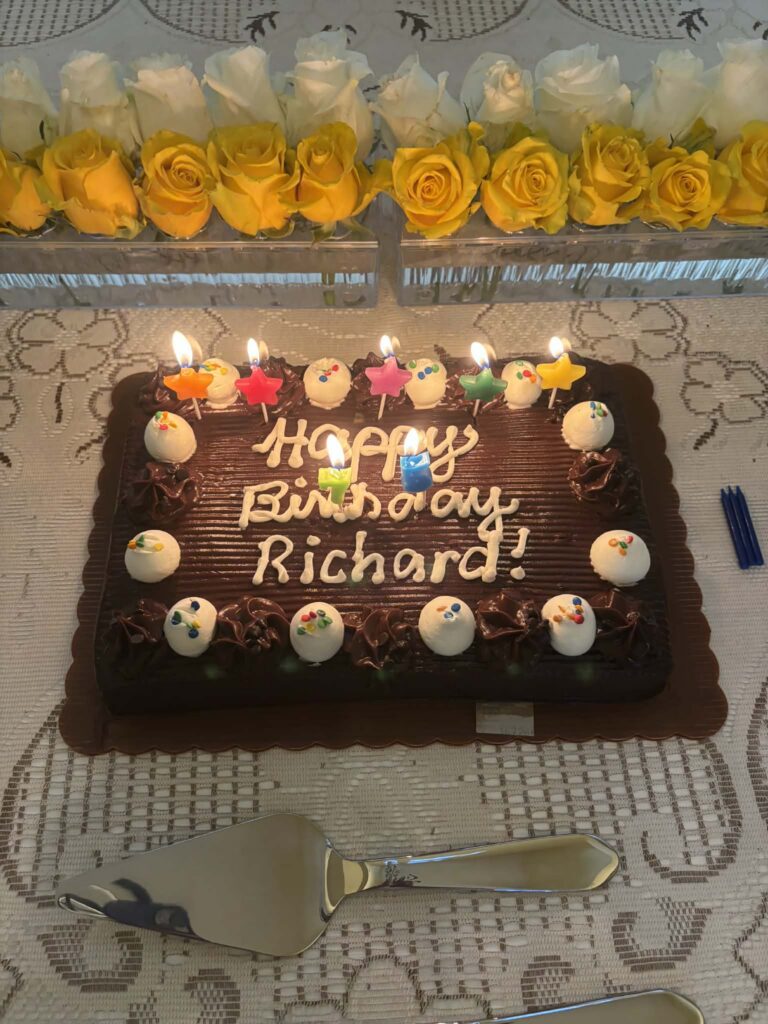
In June I celebrated my 75th birthday. It was a warm, relaxing occasion at home, surrounded by family. Folks came from Colorado, southern California, and from around the Bay Area. It was an enjoyable evening with good food and much sharing of stories and love. Best of all, no one roasted me in their after-dinner toasts, all of which were kind and moving.

Originally I did not plan to write a post about this day, but I eventually had to acknowledge that turning 75 is kind of a big deal. It meets the definition of a milestone birthday. Though as I have noted previously, it can also be viewed as a millstone birthday.

Reaching age 75 is an appropriate occasion for contemplation, to look back, to look forward, and to consider the present. I want to briefly assess each of these three vistas. While my reflections may resonate with others, every senior’s life is distinct. Each person’s feelings on reaching this milestone will vary.

*    *    *

Looking back. Reflecting on the past is an exercise I do not typically spend much time on, but this birthday did lead me to think a bit about my history. What struck me was that who I am today is a product of seven and a half decades of accumulated life experience. I am a person constructed over the past 75 years. That is a long time. A very long time, filled with events large and small.

I still recall the main contours, the principal hills and valleys I have traversed. These include some things I wish I had done differently as well as many more things I’m very glad I did during the decades past.

But as is true of most people, my life has been profoundly shaped by nuance. So much of who I am is a reflection of hundreds of small interactions over the years, periods of uncertainty, brief encounters I don’t even remember, fleeting comments made by friends and strangers.

How could I ever synthesize these events, large and small, profound and subtle, into a coherent life story? (My older brother and his wife gave me an online program for my birthday which aims to facilitate such a project, so at some point I will try.)

And are there lessons I can draw from my rotations around the sun? At this point in my life, I’m not sure. If I was 50 or 60, perhaps I could apply some learnings from the past to the years ahead. But at age 75, any such lessons are of limited utility and would be hard to implement. To be realistic, I am not going to change much in the years ahead. My personality will remain the same. My political views are not going to change. I don’t see much evolution in my habits, or lifestyle, or outlook on life. As Popeye the Sailor Man used to say, “I yam who I yam.”

Now to be clear, I don’t dismiss my past. I enjoy reminiscing. I like to share stories of growing up in Kansas, things I did over the years, people I knew, adventures I enjoyed. But, bottom line, these are anecdotes and do not explain fully who I am.

So while I sometimes reflect on the past, I intend to let bygones be bygones. At least that is my plan for now. Maybe as I mature more, my outlook on examining the past will evolve.

*    *    *

Looking ahead. At age 75, contemplating the future is a different exercise than it is for a person at age 50. Or even at age 60, when the horizon still seems far away. I feel fortunate and lucky to have lived three-quarters of a century, but uncertainty about the years ahead is unavoidable.

With each passing year, more friends and family from my generation fall by the wayside. These losses are like shooting stars – they are highly visible, and each time one blazes through the night, it seems the sky has lost another star. These deaths, increasing in frequency, are poignant reminders that my future, too, is limited.

How many years do I have? Who knows? I would love to see my 19-month-old grandson graduate from high school. But it is impossible to know whether I will arrive at that day. If seeing my grandson attain his high school diploma was to become a wager on Polymarket or Kalshi, it would be a long shot. But long shots occasionally win.

So what is a mid-septuagenarian supposed to think when considering the years ahead? I hope to maintain reasonable physical health for as long as possible. It would be great to preserve my mental acuity, though I grow ever more confused by the culture, language, and technology of the younger generations.

I try not to speculate about whether my future will be long, or short, or somewhere in between. Since nothing can be gained by dwelling on the unknowable, I do my best to keep this question in a box at the back of a low shelf in the garage. But I am human, and confess I sometimes reach for that container to look inside. Doing so never satisfies my curiosity.

*    *    *

Considering the present. I prefer to focus on the here and now, the most important time of life at every age. I want to live my days as fully as possible, At the same time I find it hard to embrace a concept I hear frequently: “Live each day as though it may be your last.” That perspective would put too much pressure on me when I wake up each morning.

I prefer the approach of living each year as though it’s my last. That offers the option of being very unproductive some days – or even some weeks – without feeling guilty. Maximal daily productivity might seem an ideal goal for older folks. But our aging bodies and flagging energy make it increasingly difficult to achieve.

In fact, for us seniors, there can be virtue in wasting time. As we grow older, efficiency becomes less important. Of course, we don’t want to fritter away month after month, but old folks deserve a break as far as how many goals we accomplish each day before going to bed.

So how to approach living in the present? As I considered this question on my 75th birthday, the most important thing I felt I should do, day by day, is spend high quality time with family and friends. Doing so creates memories. And as my wife regularly tells me, memories are the most important legacy we can leave behind.

I also want to continue to read, do volunteer work, follow-up on home maintenance responsibilities, and do some traveling. I like having fun in my daily life. This approach to living in the present is both rewarding and low-pressure.

*    *    *

In closing, I want to point out the fallacy of a throw-away line I hear more frequently, the older I get. “Age is just a number.” The folks who voice this idea imply we seniors can pick a younger number if we really want to. Feeling old is a choice. Um, no. 75 is real and indisputable. I can no more opt to be 70 than I can choose to be 55.

At the same time, it is not unusual for me to stop and think: 75? No way. I don’t feel like I’m 75. How did that happen? Being 75 years old does not seem real. It does not feel possible. But there are also occasional days I think: 75! If I feel this tired and achey now, how will I feel at age 80?

Reaching age 75 is a BFD, an accomplishment, an achievement denied to many. I feel lucky and fortunate. At the same time, it is hard to avoid the reality that 75 is damn old. I am more ancient than when I turned 70.

Think about this: our country turns 250 years old on July 4. American history has been a long, complicated journey. We have traveled through many lengthy periods, good and bad, in our unfinished quest to form a more perfect union, with liberty and justice for all, a nation of people who are created equal. For those of us 75 or older, we have been alive for about one-third of the entire time the country has existed. When you consider the length, richness, and complexity of U.S. history, living through one-third of its existence is confirmation of how old we really are.

If you enjoyed reading this post, please consider forwarding it to friends who may be interested or posting a link to your social media feed. Also, if you are not yet a subscriber, it is an easy way to be notified of future posts, which I upload once or twice a month. Just enter your email address below, then check your email for a return message that requires a confirmatory click to complete the process. Subscriptions are free and no advertising will come your way.

Negotiating with Time

June 2026

By Richard Fleming

Photo courtesy of Agê Barros

My brother-in-law died in the wee hours of the morning on June 2, 2026, from complications of esophageal cancer. He was 75 years old. And he was a good man, generous, hardworking, kind, and compassionate. A great father, husband, brother, and brother-in-law. I will miss him.

His death brings up many feelings, including the brevity of life, the cruelty of cancer, and the importance of close family bonds. It also makes me reflect on a phenomenon we older folks must engage in: a tough negotiation with time. And the older we get, the more tense the bargaining process becomes. What will time allow us to do? Which bucket list items will the clock permit us to check off? And which life goals will be rejected with the admonition, “Wise up! There’s no way you can do all that.”

At the time my brother-in-law’s cancer was diagnosed two years ago, it was already at stage 4. He still had many goals he had been planning to accomplish. Home projects. Organizing his finances. Traveling. Family experiences. But it became immediately apparent he had only a few years to live. He was forced into a more fraught negotiation about his options, knowing the time available was far shorter than he had been planning for.

As his cancer progressed despite chemotherapy and radiation, the bargaining process became more charged. What would be possible and what would not? The clock was ticking but it did allow him to accomplish a number of his goals, including getting his financial affairs in order and some traveling with family. Despite being a good negotiator, he was ultimately denied the ability to achieve many things he had been hoping to do.

*    *    *

When we are young, time seems endless. The years unfold slowly. Horizons are too distant to appreciate and understand, and are not yet a looming presence. If we don’t finish some projects this year, there is always the next. No need to stress.

But as we age, clocks run faster, time passes more quickly, and the years fall from the calendar ever more rapidly. We are forced to pick and choose, to negotiate over how much and what we can do.

When I retired in my mid-60’s, I knew I was well past half-way through. I could clearly see the horizon. But I did not feel any particular pressure to put a rush on my long-term goals.

Now that I’m in my mid-70s, the clock face looks different. Even though I am fortunate to still be in good health, the accelerating movement of the clock’s hands is beginning to concern me. Reality is harder to dodge. It would be great to live 15 more years, but who knows how many I will actually have? And for how many of those remaining years will my health hold up enough that I can continue to travel, volunteer, write, read, teach, and get together with friends?

Of all life’s goals now, spending time with family is the top priority. In my bargaining with time, this is one activity I take a firm stand on. But it is not exclusively my call. As I bargain with time, I’m pretty sure it will concede that for the time being I can still travel with the kids and grandkids, enjoy family get-togethers, and babysit. But can I negotiate a commitment from the clock that I will see my 3-year-old granddaughter and 1-year-old grandson graduate from high school? It is a dicey proposition and a big ask.

*    *    *

Young and middle-aged adults must confront the usual life stresses, which can sometimes be significant. But for the most part they are able to move smoothly through the seasons and comfortably through the years. They don’t feel a compelling need to discuss things with the clock.

But for us Boomers, we know time is shortening. We must negotiate with time, which fundamentally means negotiating with ourselves. We have to decide what is most important and what to let go. As we age, the balance of power shifts decidedly from us to the clock. As we make more transits around the sun, we are left with fewer cards to play. Our bodies begin to betray us.

And as we lose more and more friends and family, we become increasingly aware that a phone call from our doctor’s office can change our relationship to the clock in an instant.

I am not surfacing this topic to generate despair. Rather, I think it is important to understand our changing relationship to time. None of us ever achieves everything we planned to do when we were younger. Hopefully we accomplished enough so that when we look back, we will feel our lives were well lived. Even though our negotiations with time become more stressful as we age, we still have the opportunity – in each year, in every season – to choose what is most important and meaningful. I will do my best to choose wisely, but I am a human and as is true for us all, there are no guarantees..

If you enjoyed reading this post, please consider forwarding it to friends who may be interested or posting a link to your social media feed. Also, if you are not yet a subscriber, it is an easy way to be notified of future posts, which I upload once or twice a month. Just enter your email address below, then check your email for a return message that requires a confirmatory click to complete the process. Subscriptions are free and no advertising will come your way.
Re-reading One of the Classics

May 2026

By Richard Fleming

Photo courtesy of Simone Dinoia

Reading fiction offers myriad benefits to the aging brain, though it can be difficult for us old folks to pursue this activity since life in retirement is so busy. I find being a member of a book club helps. Last month’s book was a novel I first read in high school and the experience of re-reading it was both fascinating and eye-opening.

Upon re-reading it, my understanding of the novel differed greatly from how I understood it 60 years ago. Even though the book’s words had not changed, it felt like I was reading a completely different work of literature. In this post I want to explore why this happened.

The book is George Orwell’s 1984. Published in 1949, its themes loom large over the country we live in today. In polling of Goodreads readers, the novel regularly ranks as one of the “darkest books of all time.”

Why bring up such a bleak subject in a blog that attempts to highlight some of the positive aspects of aging? Well, life is not always a bed of roses, as we seniors know from experience. And it is important we understand the dark world conjured up in 1984. This book and its lessons are part of the legacy we are leaving to our children and grandchildren. It will likely be read for decades to come, though many school districts have tried to ban it because they are afraid of young people reading its words.

*    *    *

To briefly summarize the book, 1984 recounts the life of civil servant Winston Smith, who works in a government department called the Ministry of Truth in London, in the country of Oceania. His job is to rewrite previously published newspaper stories to conform to whatever changing narrative Big Brother wants the population to believe. Big Brother was Oceania’s totalitarian ruler. Smith grows increasingly dismayed with the lack of freedom and the way truth, facts, and science are manipulated to justify authoritarianism. He finally decides to rebel but (spoiler alert) things do not go well.

The novel was fantasy, of course. At the time he wrote it, George Orwell aimed to shine a light on the evils of the fascist movements of the World War II era and the totalitarian tendencies which emerged subsequently.

When the actual year 1984 arrived, I reflected on having read the book and how little resemblance our country bore to what the novel anticipated. George Orwell had been mistaken, I thought with some measure of relief, though he had written an engrossing parable about the circumstances of life in some countries during the World War II years.

*    *    *

So what made the re-read so different from my original reading? Two reasons come to mind. The first would apply to any time a senior re-reads a book he or she first read as a youth. Many decades of life experience change our understanding of the world, society, and humanity. Like all old folks, I now view life very differently than when I was navigating high school.

When I re-read the novel this time around, my mindset was different. As I went through the book last month, my brain processed its words and ideas through an altered set of lenses and filters. Now that I’m in my mid-70s, I understand love, family, friendship, success, power, and loss very differently than I did in the distant past. 1984 touches on all these themes, and re-reading Orwell’s words had a more powerful impact on me now that I have more experience and knowledge of how life unfolds.

The second reason the re-read was so compelling is specific to this book. When reading speculative fiction which describes a possible future, our response is inevitably influenced by the world we currently live in. Is the future described by the author feasible? Is it likely? When I first read this book in 1966, the world and society we lived in were quite different from today. I could not imagine the world presented in this book would ever come to pass.

Orwell prophesied a future in which facts are malleable, history is changeable, and people are discouraged from reality-based thinking and can be convinced to believe black is white. In Orwell’s Oceania, empathy is a weakness to be rooted out and the authoritarian government convinces everyday people it is working in their interest, even as it makes life worse day by day. In high school, I interpreted the book to be an exaggerated characterization of how people were kept under control by the fascist rulers of the 1940s. But of course it could never really happen.

Fast forward to today. Hmmm. While we are not living exactly in the world Orwell described, many of the social control mechanisms he predicted are being deployed in the here and now. Orwell also described mass deportations of undesirable races from Oceania. He recounted how the government celebrated bombing small boats carrying people trying to immigrate to the country. In his novel, government authorities monitored people’s public speech and punished anyone who did not celebrate the dear leader. Big Brother ruled a system marked by “…victory after victory, triumph after triumph after triumph.” He never got tired of winning.

How can anyone not read 1984 today and wonder whether it is being used as a playbook for those currently running our country. What seemed like an impossible fantasy when I was in high school now appears to be alarmingly close to today’s reality. Just to be clear, I do not feel we are currently living in the world of 1984. Not exactly. And there is a much stronger counter-movement today working to challenge authoritarianism than was possible in the world of Orwell’s 1984. Thank goodness.

*    *    *

Classic literature is called classic for a reason. It conveys universal themes and ideas which resonate through time. When we re-read any work of classic literature today that we first consumed long ago, it is illuminating how differently we understand it. This happens in part because we ourselves have changed and evolved and in part because the world has changed and evolved.

People grow old, a process which changes and enriches our experience of reading. But great literature never grows old.

If you enjoyed reading this post, please consider forwarding it to friends who may be interested or posting a link to your social media feed. Also, if you are not yet a subscriber, it is an easy way to be notified of future posts, which I upload once or twice a month. Just enter your email address below, then check your email for a return message that requires a confirmatory click to complete the process. Subscriptions are free and no advertising will come your way.
Expiration Dates

April 2026

By Richard Fleming

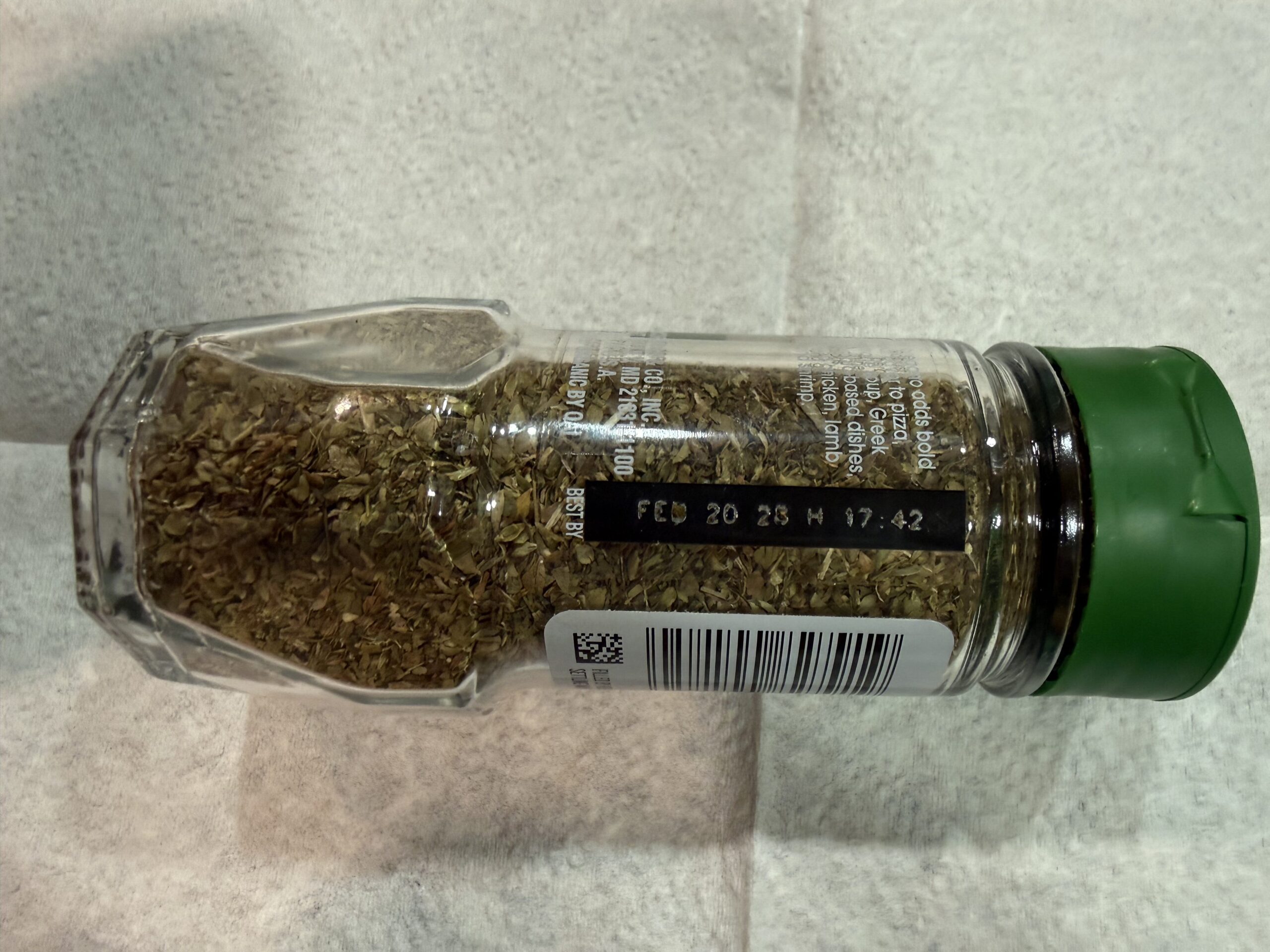
Expired bottle of oregano, photo by Richard Fleming

One of many characteristics that distinguish older folks from the younger generations is the vast array of expired products which fill our homes. Adults of all ages have items scattered around – in pantries, in the back of shelves, hiding in the garage, and in the refrigerator – that are past their expiration date. But in my experience, the silver generation stands out in both the quantity of such products and how far out-of-date they are.

When our kids are visiting, they occasionally rummage around the kitchen in search of food or the bathroom in search of some over-the-counter meds. And it is not unusual for one of them to come up to me holding a bottle in their hands, shaking their head, and saying, “You do know this is expired, right? Why is it still in the medicine cabinet?”

I often counter with, “You do know those expiration dates are not really valid, right? It’s still in the medicine cabinet because it is fine to use products for some time after their alleged expiration date.”

They come back with, “But this thing expired five years ago.”

At that point, there is little I can say, and I sheepishly acknowledge it might be a good idea to just put it in the trash.

*    *    *

I must say I am actually amazed at how many expired items my wife and I have. From old jars of canned tomatoes, to small containers of oregano and paprika, to anti-histamines and decongestants, to you-name-it, we have a lot of too-old things scattered widely throughout our house. I recently found a container of baking powder whose smudged expiration date was so old I could no longer make it out. Was the “use by” date May 2024 or Apr 2014? It was impossible to know.

It is true that many expiration dates are a bit flexible. As far as food, milk can usually be used for at least several days after its “use by” date. Eggs are usually safe for several weeks after. A lot of non-refrigerated food stuffs can be used for years, like salt, sugar, white vinegar, and others.

For many non-food items, like lotions, cleaning products, etc., expiration dates tend to be suggestions more than mandates. As far as OTC meds, if they’ve been kept at a stable temperature, they are almost always good for a year or so after their “use by” date.

But it is true that for many products, expiration dates offer a reasonably good idea about when they need to be discarded.

It would be interesting to have a contest with other seniors to see who can lay claim to possessing the most out-of-date product. I’m sure there are decent, high-minded people living among us who retain some goods or products that expired at some point in the prior century. If you feel like sharing this information, please consider posting in the comments section.

*    *    *

So why does this happen? Why do old people have so many more old products than younger folks? And why are our expired goods so much further out-of-date than those found in younger folks’ homes?

I suspect it is partly connected to the problem that many seniors have with clutter. Our homes tend to acquire and retain stuff. Stuff of all kinds. It is almost like the force of gravity in old people’s homes grows more powerful over time. This force pulls in a constantly increasing stream of items over many long years. And it becomes increasingly difficult for these products to escape the gravitational field.

Another factor is that many seniors try to be thrifty souls. We hate to throw out things that might be usable or edible even if they are past their expiration date. Is the “use by” date really valid? Why buy a new container of coriander when that one on the shelf is only two (OK, maybe four) years out of date? Another factor is that if we buy a new jar, we are unlikely to use the whole thing up before it too expires, which would be wasteful. And does it even matter if the coriander in the old bottle is less pungent? I mean, who really likes coriander anyway.

OK, I understand I’m drifting into overt rationalization. I fit the pattern of old folks having a lengthy experience with deflection and rationalization. We’ve had years of practice. Being able to rationalize is in our job description. This does not mean our practice of ignoring “best by” dates is optimal. I will certainly agree we should be a bit more conscious of the need to dispose of items before too much time elapses post-expiration. We seniors need to be more responsible about de-cluttering our homes, and eliminating out-of-date goods fits right in.

*    *    *

In closing, I need to mention the most important things in the home whose expiration dates merit attention. Their dates are important but can be very hard to decipher. I’m referring to the expiration dates of the people living in the home. My wife and I are in our, um, early-ish-70s. We have each had various health problems, but fortunately are doing fairly well, all things considered. It would be great to know our expiration dates. It would help with planning and budgeting. It would be useful for our kids and grandkids to know.

But there is no way to know our own expiration dates. And that is part of the mystery and magic of aging. So we will remain in place for the time being. That being said, there is room for debate on whether we’ve passed our “best by” dates, but let’s leave that topic alone for now.

If you enjoyed reading this post, please consider forwarding it to friends who may be interested or posting a link to your social media feed. Also, if you are not yet a subscriber, it is an easy way to be notified of future posts, which I upload once or twice a month. Just enter your email address below, then check your email for a return message that requires a confirmatory click to complete the process. Subscriptions are free and no advertising will come your way.

Seniors WFH

March 2026

By Richard Fleming

Photo courtesy of Natalia Blauth

Once a week, I try to do a Facetime call with two of my grand-nephews who live in New York City. During the call I read a book to them – currently we’re ambling through The Wild Robot Escapes by Peter Brown – though we also chat about their life in the big city. I’ll also sometimes check in with their parents.

With the recent heavy snowfall on the East Coast, I was worried about how my niece and nephew would get to work, so I sent them a message of concern. My nephew responded with an assurance they would be fine because they were “WFH during the blizzard” (working from home). He then asked how my wife and I were doing in California. I looked outside at our 56-degree weather, and felt a twinge of guilt. As I was getting ready to respond with “fine” or something similar, my wife quickly said, “Just tell him we are WFH also.”

I paused briefly, then told myself, “WTH, we really do WFH every day.” We may not have typical jobs with set schedules, biweekly paychecks, commutes, and days off. But aging is a full-time job and we work hard at it, day after day, week after week. And the same is true of most old folks I know. Growing old is hard work. And much of it is WFH.

So I messaged my nephew back and told him we were WFH also. He responded, “Is there a blizzard there?” My reply, “No, but you know we’re in our 70s, so we WFH.”

*    *    *

Many younger and middle-aged folks appear to think the silver-haired generation has an easy, slow-paced life. In case any of them are reading this post, let me offer a brief picture. From sunrise to sunset, we seniors are busy beavers. We have to get out of bed, which can be a challenge. We have to complete our morning hygiene activities, and they become more strenuous and complicated as we age. We then need to figure out how to make a reasonably nutritious breakfast.

After our morning meal, our days are consumed with countless activities, including laundry. Cleaning the house. Fixing broken appliances. Trying to prevent houseplants from dying. Keeping up with current events. Discarding clutter. Trying to stimulate our brains by learning new languages or doing word puzzles. Reading books, especially fiction and poetry. Doing some exercise (hopefully). Yard maintenance. Babysitting grandchildren. Grocery shopping. Preparing lunch and dinner. Remembering to take all our medications, the number of which expands year by year. Keeping track of our increasing number of medical appointments, dental appointments, lab work requirements, and vaccinations. Volunteer work. Paying bills while making sure we don’t run out of money. And many more responsibilities and chores. I haven’t even mentioned the work of scheduling in activities we actually enjoy, like spending time with family and friends.

I hope my abbreviated description of our daily activities makes it clear that old folks set the gold standard for productivity while WFH.

And we do all this work despite having less get-up-and-go than when we were young and vigorous in our 50s and 60s. Our mitochondria, vital little structures inside our cells, are fading, which means we have less energy to draw on. It is not unusual for our medications to contribute to fatigue. Seniors often sleep less soundly than younger folks. And then there is the fatigue induced by the chronic illnesses and conditions we must deal with.

Seniors have to do a lot of work with less energy and stamina than other generations. We do not get days off. Three-day weekends are a distant memory. We are not paid overtime. The well-known saying “There is no rest for the wicked” needs revision. Let’s rephrase it: “There is no rest for the wicked and the old.”

*    *    *

I want to clarify I am not complaining about WFH. While it is true I frequently feel busier now than when I had a real job, I am grateful I have the opportunity to WFH as I grow old. More and more frequently, I learn of the death of a friend, or an acquaintance, or a distant family member. And often they are my age or younger. This is scary indeed. I will gladly WFH for as long as I can.

So when the clock reaches 4:00 p.m. and I start feeling run down, knowing I still have a lot to do before bedtime, I just tell myself, “WTF, you’re so lucky to be WFH. No commute. No parking hassles. You can rearrange your schedule any time you want. You can pace yourself. You can take frequent breaks. If you fail to complete your day’s assignments, you are not called in to the supervisor’s office for a discussion. WFH is great!”

Seniors don’t need a blizzard to WFH. We work from home no matter the weather. Growing old is the quintessential WFH job.

If you enjoyed reading this post, please consider forwarding it to friends who may be interested or posting a link to your social media feed. Also, if you are not yet a subscriber, it is an easy way to be notified of future posts, which I upload once or twice a month. Just enter your email address below, then check your email for a return message that requires a confirmatory click to complete the process. Subscriptions are free and no advertising will come your way.

The Poetry of Growing Old

February 2026

By Richard Fleming

Photo courtesy of Annie Spratt

Nature, by Henry Wadsworth Longfellow

As a fond mother, when the day is o’er,
   Leads by the hand her little child to bed,
   Half willing, half reluctant to be led,
   And leave his broken playthings on the floor,
Still gazing at them through the open door,
   Nor wholly reassured and comforted
   By promises of others in their stead,
   Which, though more splendid, may not please him more;
So Nature deals with us, and takes away
   Our playthings one by one, and by the hand
   Leads us to rest so gently, that we go
Scarce knowing if we wish to go or stay,
   Being too full of sleep to understand
   How far the unknown transcends the what we know.

Poetry has never been a big interest of mine. I have occasionally tried reading it, yet often found myself mystified and lost. I know poems are important literary forms. But they can be so hard to understand. Poems present with a paucity of words. What is the author trying to say? And poetry often displays an unusual physical form, the lines sashaying down the page, so different from the organized format of prose – sentence, next sentence, paragraph, next paragraph, chapter, next chapter, repeat.

After recently reading some poetry I found easier to understand, an unexpected notion popped into my head. I realized aging can be viewed as poetry, in both form and content. OK, this may be a challenge, but I will try to explain.

*    *    *

Let’s start with form.

Old folks possess a different stature and carriage than younger folks. Our bodies can appear disorganized and altered, as is often true of poems. Of course we resemble the general human form of younger folks, but our body parts can be askew. Our proportions are less orderly, another common feature of poetry.

Something else. Seniors often move differently as we grow older. Where younger folks amble straightforwardly across the land, our gait becomes slower and uncertain. Our hands can tremor. Our progress, even our intentions, can be murky early on. Just as is true of poetry. But once we reach our goal, things become sorted. Both poetry and seniors move in ways that may seem initially obscure, but eventually our intentions are revealed.

What about content?

The brains of old people contain vast arrays of knowledge, nuanced and layered by years of lived experience. Our minds are treasure troves of dense emotions, decades deep. As is true of poetry, we often communicate using words, phrasing, and rhythms that are unfamiliar to younger listeners. The meaning we are trying to convey – the full scope of content behind our words – may be hard for those with less life experience to grasp. Our words can resemble poetry, even though we do not speak in rhyme.

*    *    *

In other words, both poetry and aging are complex and often difficult to fathom.

In poetry, stanza follows stanza, eventually revealing meaning, emotion, and wisdom. Growing old follows a similar path. Decade follows decade, eventually illuminating purpose, sentiment, and understanding. Appreciating the beauty and richness of poetry takes time. In the same way, seeing the beauty and richness of aging evolves over many long years.

In a prior blog post I encouraged seniors to read more fiction. I want to also recommend we read more poetry. Grappling with different forms of poetry may help shine some light on the dappled, mist-strewn road we are trying to traverse with some degree of resolve and grace.

*    *    *

It is notable that poetry encompasses a range of styles and forms. Free verse, ballads, haiku, sonnets, blank verse, odes, palindromes, and others. But all are poems.

This is also true of aging. It too encompasses a range of styles and forms. There is no single approach. For some, growing old is more complicated. For some, more abbreviated. For some, more upbeat. For some, more rhythmical. For some, more sentimental. There are so many ways to grow old. But for each of us, growing old is a form of poetry. And we are the authors of our poems.

Understanding aging as poetry can have immediate practical applications. The next time your knees ache, or you have trouble standing up from the couch, or you wonder why you walked into the dining room, tell yourself these phenomena are stanzas in your poem.

I have previously written about how seniors live our lives in analog. I now realize we also travel through time as a form of poetry. Let the young folks live their lives in prose. One day, if fortune shines on them, they will come to understand the beauty of living as poets.

I will end with an excerpt from:

Passing of the Old Year, by Mary Weston Fordham

Ah! the year is slowly dying,
And the wind in tree-top sighing,
   Chant his requiem.
Thick and fast the leaves are falling,
High in air wild birds are calling,
   Nature’s solemn hymn.

In the deep, dark forest lingers,
Imprints of his icy fingers,
   Chill, and dark, and cold.
And the little streamlets flowing,
Wintry sun so softly glowing,
   Through the maple’s gold.

So, Old Year, gird on your armor,
Let not age, nor fear, nor favor,
   Hurry you along.
List! the farewell echoes pealing,
List! the midnight hour is stealing,
   Hark! thy dying song.

If you enjoyed reading this post, please consider forwarding it to friends who may be interested or posting a link to your social media feed. Also, if you are not yet a subscriber, it is an easy way to be notified of future posts, which I upload once or twice a month. Just enter your email address below, then check your email for a return message that requires a confirmatory click to complete the process. Subscriptions are free and no advertising will come your way.

Hobgoblins Love to Torment Seniors

January 2026

By Richard Fleming

Photo courtesy of David Trinks

As the years accumulate, I have recently become aware of an unusual phenomenon predominantly affecting seniors. This curious trend is the fact that hobgoblins often take up residence in the homes of people over the age of 70. There is no question they have moved into our house. I try to be accommodating and would not mind a single hobgoblin living under our roof. Maybe even one couple. But the problem is the hobgoblins are reproducing at a good clip and the creatures appear to be laying claim to every room.

We had none of these creatures living in our house ten years ago. But they’re here now, in force. And their sole purpose is to make the lives of my wife and I more difficult.

Hobgoblins are masters of grabbing things and hiding them. Before mentioning a few examples I want to first acknowledge that everyone occasionally misplaces things, including young people enjoying their care-free lives as 50-something-year-olds. But the hobgoblin taunting of seniors, their dastardly games of hide-and-seek, are far more pernicious.

Multiple times a month I find myself wandering around the house looking for missing items. A new tube of toothpaste I placed under the bathroom sink. A bottle of neem oil spray for plants that I put on a shelf in the garage. A sticky-note listing chores I need to do which I placed on the desk. I recall exactly where each of these items was placed, but they disappeared. My wife’s glasses are often missing from her bedside table. Her purse vanishes from the chair she placed it in.

There is only one possible explanation: hobgoblins at work. I could list countless examples, but I need to be careful about how long this post runs.

For some reason, the hobgoblins enjoy tormenting us by waiting a few hours, sometimes several days, then returning the item they pilfered, but putting it in a different location. So we often stumble across something they stole, but it is not where we placed it. This is a simple statement of fact.

Hobgoblins also know how to make me lose information inside my brain. Over the last few years it is becoming more common for me to walk upstairs to get something, but when I get there I no longer recall what I needed. Ditto for heading out to the garage. What did I need from there? I know it must have been important, since getting to the garage required me to get up from a very comfortable couch in our family room.

In a similar vein hobgoblins are adept at throwing wrenches into the functions of common household appliances. They clog toilets. They love to prevent showers and sinks from draining. They muck up garbage disposals. They mess with windows to allow rain water to leak inside and cover the windowsill.

And do not get me started on what the hobgoblins have done to our house plants. They have executed many of them, including nice plants which were living healthy, unassuming lives for many years.

Hobgoblins regularly invite ants, spiders, and sundry unidentified bugs into the house. And I assume it is the hobgoblins that have advised owls to start hooting loudly outside our bedroom window. Usually at 2:30 am.

Now I can already imagine what some of you are thinking. How could this guy have hobgoblins residing throughout his house but he can’t see them. Fair question. But I can assure you they do live here. The last few years I have started to hear more frequent creaking noises coming from the ceiling or walls while I am sitting quietly, having my morning coffee and reading about the latest assault on our democracy. Skeptics may claim these are common noises from the normal settling of a three-decade old house. But when you combine these noises with all the other nefarious events taking place under our roof in recent years, there is only one possibility: hobgoblins.

I have many friends and acquaintances in their 70s and older who describe similar problems, confirming this is a phenomenon linked to the aging process. Why do hobgoblins choose to torment us old folks? They know we are slow of step, our vision is slipping, and our reflexes have diminished. They have discovered over time that living in the homes of seniors is a safe refuge.

OK, I will acknowledge my assessment that hobgoblins have moved into our house and are making mischief may be a bit of a stretch. Maybe there is another explanation. Maybe it’s gremlins. Or elves. Pixies, perhaps. Maybe regular goblins. Gnomes or trolls certainly merit consideration. I’m open to any evidence-based theory. But the existence of these devilish creatures inside our house, running amok, is not open to question.

*    *    *

I am not naïve about the challenges of aging. During my long years in medical practice, I took care of many seniors. I did my best to help them accommodate and adjust to the increasing limitations which accrue as we age. And there are many. Chronic medical conditions of all sorts. Increasing pharmaceuticals. Declining energy. Memory lapses. Traitorous joints.

But at no time was I asked to address the problem of hobgoblins moving into seniors’ homes. For some reason, this never surfaced as a clinical problem.

I suspect the reason is that many seniors, though they wondered about the increasing incidence of unusual, hard-to-explain phenomena taking place where they lived, felt it was not an appropriate topic to bring up with their doctor. I’m sure many of them never considered the possibility that hobgoblins were responsible.

Well, I am here to clear up the mystery. If I was still in practice, I could do so much more to help my older patients better understand the aging process.

But. There is one big remaining problem. And that is how best to get rid of the hobgoblins. So far, I have not come up with any preventive  or therapeutic measures to address this common problem of old age. Hopefully research scientists will be able to provide some answers in the next few years. Until they do, I wish all seniors the happiest new year possible during these trying times.

If you enjoyed reading this post, please consider forwarding it to friends who may be interested or posting a link to your social media feed. Also, if you are not yet a subscriber, it is an easy way to be notified of future posts, which I upload once or twice a month. Just enter your email address below, then check your email for a return message that requires a confirmatory click to complete the process. Subscriptions are free and no advertising will come your way.

Type your email…

Aging in Fits and Starts

December 2025

By Richard Fleming

Photo courtesy of Meg Boulden

Growing old is complicated, an enigmatic journey. I used to think Malcolm Gladwell’s “10,000-hour rule” made sense. He believed it took 10,000 hours of working in a complex field to become an expert. Seems reasonable, right? Well, if old age starts at 65, I have 83,227 hours of experience with this process and I still do not understand it well. Maybe grasping the ins and outs of aging requires a 100,000-hour rule.

One of many confounding aspects of growing old is that it does not happen in a gradual steady way. If aging happened in a linear fashion, we would see a slow continuing decline in our physical and mental functioning as the years pass by. Our aging process would be predictable, unsurprising.

But that is not what happens. Aging unfolds in fits and starts.

*    *    *

Sometimes a reduction in our function and vitality occurs abruptly because of illness. We may be pushing the grocery cart through the produce section, minding our own business, happy we were able to vote to protect democracy last month, when all of a sudden, boom, we fall to the ground and are paralyzed on our right side from a stroke.

Maybe we are sitting on the couch after eating a healthy dinner of fresh halibut, watching “A Man on the Inside” on television, when we suddenly feel a 30-pound weight on our chest. In the Emergency Department our suspicion that we might have had a heart attack is confirmed.

Or we might be peacefully watering our houseplants when the phone rings. It is our doctor’s office calling, saying she needs to see us this afternoon to discuss the results of our recent x-ray.

These kinds of problems interrupt our prior gradual process of aging with a jolt. We suddenly become five years older. Or ten. And there is no going  back. The smoothly-sloping downward trend we had been following suddenly assumes the shape of a cliff. When this happens it is clear that aging occurs in fits and starts.

Sometimes we are presented with a diagnosis which signals a faster rate of decline, but is not a cliff. Parkinson’s, congestive heart failure, chronic kidney disease – when we learn of having conditions like these, we know we will be facing more challenges sooner. The slope of our aging just became steeper.

Fortunately, through no virtue of my own, I have not yet been given any of these diagnostic accelerants. But of course the phone could ring anytime.

*    *    *

There is another interesting fits-and-starts phenomenon we oldsters can experience while we’re slip-sliding down the slope. Our bodies go through periods when the aging process accelerates for a while before resuming its prior trajectory. Over the course of a few months, we seem to lose a few years. Medical studies confirm this can happen.

I’ve experienced this phenomenon on a couple of occasions. Several years ago, I noticed over a period of a few months that I was having a harder time squatting down and standing up. At first I thought it was temporary. Maybe I’d strained my knees. But after a few months went by with no improvement, it dawned on me that squatting would be a bit of a challenge from that point on. And to think that activity had been a piece of cake, not long ago.

More recently, I’ve noticed a change in my general energy level. Compared to a few months ago, I get sluggish more easily. I get more tired, even when not doing a lot of activity. My sleep pattern has not changed. I’m eating the same as I always have. There is no recent change in life circumstances. My latest annual physical lab work was normal. But my stamina is not what it was even this past summer.

Maybe you have experienced something similar? Some change that came on over a few weeks to months that marked a break from your previous health status? This is another way that growing old proceeds in fits and starts.

*     *     *

Scientists are starting to confirm that changes in our metabolism and molecular structures related to aging do not happen in a steady linear fashion throughout life. A 2024 study in Nature Aging looked at various molecular markers of aging in 108 people. The authors found that at around age 44 and again at around age 60, there was a more rapid decline in function, compared to what was otherwise a reasonably steady decrease. Another study in Nature Medicine in 2019 also found occasional periods of more rapid molecular changes, but they identified these changes as happening at around ages 34, 60, and 78.

So the science on this issue is still evolving, as science often does. But it does seem clear that on a biochemical basis, our aging process is not a smooth downward slope.

*    *    *

So what are the take-home lessons for us old folks? Your guess is as good as mine. I am unaware of anything we can do to avoid the fits and starts of aging. Of course eating well, exercising our bodies and our brains, socializing, getting enough sleep, and avoiding stress can help. But even so, there will be times when it seems the speed of aging is increasing for a period.

When I was starting to plan my post-retirement life, I never thought that at age 74 I would find myself thinking, “Wow, I felt so much healthier at age 72.” I never imagined I would tell myself, “I would love to feel 73 again.”

But nowadays such thoughts do cross my mind.

If you enjoyed reading this post, please consider forwarding it to friends who may be interested or posting a link to your social media feed. Also, if you are not yet a subscriber, it is an easy way to be notified of future posts, which I upload once or twice a month. Just enter your email address below, then check your email for a return message that requires a confirmatory click to complete the process. Subscriptions are free and no advertising will come your way.

« Older posts

© 2026 Older But Wiser

Theme by Anders NorenUp ↑