May 2024
By Richard Fleming

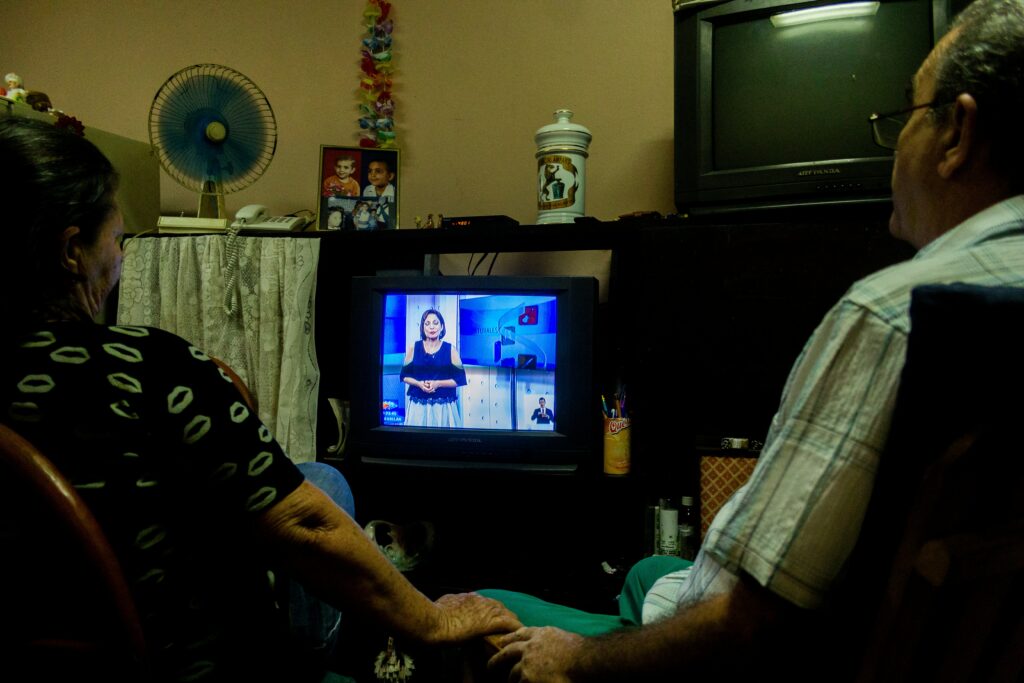
Photo courtesy of Mark Paton
I could pick any number of body parts to complain about but today’s ire is directed at my ears. They are not functioning up to par. Many of my body’s organs have to perform complex jobs all alone. I have one nose, and it seems able to do its work without complaint. Ditto for my one mouth and one heart and one liver. Despite having no coworkers, they seem to function just fine. So what is up with my ears? I have two, but they are simply not fulfilling their job responsibilities.
Now, I do understand that being able to complain about my ears is a luxury and a matter of luck. I am fortunate to have most of my body parts functioning fairly well, as far as I know at the moment. I could have many more serious problems to rail at. But allow me a brief period of whining, then I will cease and desist.
My hearing loss first manifest about two decades ago when I was in my early 50s. I’ve been wearing hearing aids ever since. I admit to being a mite resentful about this problem. It was not self-inflicted by mistreatment of my ears in earlier years. I did not attend loud concerts nor did I blast my ears through headphones. For me it is a genetic issue. My father had early-onset hearing loss and had to wear bulky hearing aids starting in his 50s. Two of my three siblings have hearing loss also.
Actually, it took some time for me to realize my ears were on the fritz. For a while I had been having some trouble hearing patients in the exam room. I attributed the problem to them speaking too softly, combined with ongoing background noise from the ventilation system. But one day, after repeatedly asking a nice elderly lady to speak up, I realized it was unlikely all my patients had suddenly conspired to communicate with me sotto voce. It was time to sign up for a hearing test.
My audiogram showed a definite problem, especially in the higher frequency ranges of people’s voices. The audiologist recommended hearing aids and I reluctantly agreed to a trial. They surprised me. I found it easier to understand what patients were saying. And, not long after, my kids told me they’d noticed my hearing loss about a year earlier. They had been hesitant to say anything, fearing it would embarrass me. But when I started wearing hearing aids, it opened the door for them to tell me how frustrating it had been to talk with me.
The first few years, I was reluctant to use the hearing aids consistently. I would wear them exclusively in situations where it seemed hearing loss could be a problem. Seeing patients was an important venue, so I wore hearing aids in the exam room, though I had to remove them to use the stethoscope.
For some reason and for some time, I felt that wearing hearing aids was embarrassing. Society seems to stigmatize hearing aids more than other assistive devices, like glasses. Glasses are no big deal. They do not imply frailty nor are they a sign of old age. Glasses can even be a stylish accessory to alter one’s appearance. But hearing aids are viewed as a sign of withering, a marker of inability to function normally. They do not make a sophisticated fashion statement.
After a few years, I got past my hearing aid embarrassment phase. My patients helped by reassuring me it was fine to pop the devices out of my ears to listen to their lungs and heart. I eventually decided the heck with it, and began to insert my hearing aids in front of other people when I needed to hear better. I still occasionally catch a little side-eye from someone when I do so, though my perception may be more a reflection of some lingering feeling of awkwardness. It’s likely the person’s glance reflects curiosity more than a judgment about my frailty and oldishness.
* * *
As time has passed, I have had to replace my hearing aids several times, and they seem to be getting a little better with each new version. But I have also found something else to complain about: hearing aid controls are becoming too technological, too sophisticated, and too complicated. When I first got hearing aids, adjusting them was straightforward. I turned them on and put them in my ears. I could increase or decrease the volume with a small rocker switch on the right heading aid. No big deal.
But today’s hearing aids require adjustment with a smartphone app. And the options for controlling them are myriad and mind-bending. I can – using the app of course – set multiple possible programs for the devices, including “noise/party,” “outdoor/traffic,” “(i)focus 360,” and others. Seriously, I have no clue what these programs do. I can change the “sound balance” to various settings between “sharp” and “soft.” What on earth do these concepts mean? And I can set up the hearing aids – using the app – to automatically connect to my cell phone. After two days of trying to accommodate that function, I was getting stressed out and my blood pressure was rising. I prefer a simpler life, one in which when the telephone rings, I hold it up to my ear and say, “Hello.” It took about 30 minutes of fumbling with the darn app to figure out how to disable that feature.
I do appreciate that companies which manufacture hearing aids are trying to make them better. They think that introducing lots of digitally-controlled fancy features will make these devices more useful. Well, I have a small piece of advice for these companies:
Hearing aids are principally used by old people, and most of us folks do not like using apps on our phones to control devices we need and use every day, including our hearing aids. Apps are complicated. Smartphone screens are small and hard to read. We don’t want app-controlled stoves, refrigerators, doorbells, canes, glasses, or vacuum cleaners. So please, just stop it.
OK, now I feel better. A little venting can be therapeutic.
I readily acknowledge that hearing aid problems pale in comparison to the other difficulties brought on by aging. Growing old is a mighty peculiar process. It can happen at various speeds for various people. Sometimes it advances as quickly as a thunderclap. One moment a person is fine and walking and talking and eating and smiling. The next moment the doctor’s office calls with some test results. Or a person’s heart decides it has had enough. Other times, aging proceeds slowly over the years, inexorably, chronically, bringing us down through a thousand small cuts. Hearing aids fall into this second category. They are just one more small nuisance as we journey onward. I should be grateful I can complain about them.
* * *
On a different note, I want to let readers know I will be taking a break before publishing my next post. Since starting the blog two years ago, I have posted twice a month. The coming few months will be busy for my family and I won’t have time to continue this same schedule. I have plenty of topics to write about and will resume later in the summer or early fall.
I’m also considering redesigning the blog. I have not made any changes in its appearance and will look into several possible new formats. The content will remain largely the same. I will continue to ruminate, complain about, extol, bemoan, and celebrate this ever-more-complex journey through time we are making together.
And I promise to never use so-called artificial intelligence to generate my posts. My words and ideas are all of natural origin. Whether they reflect any form of intelligence remains to be seen.
I deeply appreciate and am sincerely grateful to you for reading these posts and for your comments. I have learned from you, and the sharing of ideas and experiences helps make our trek into the future more understandable and somewhat easier. Thank you.
* * *
If you enjoyed this post, please consider subscribing to be notified of future posts. Subscriptions are free.