Observations While Traveling Down the Road of Aging

Category: Aging (Page 7 of 8)

Covid Increasingly Targets Seniors

February 2023

By Richard Fleming
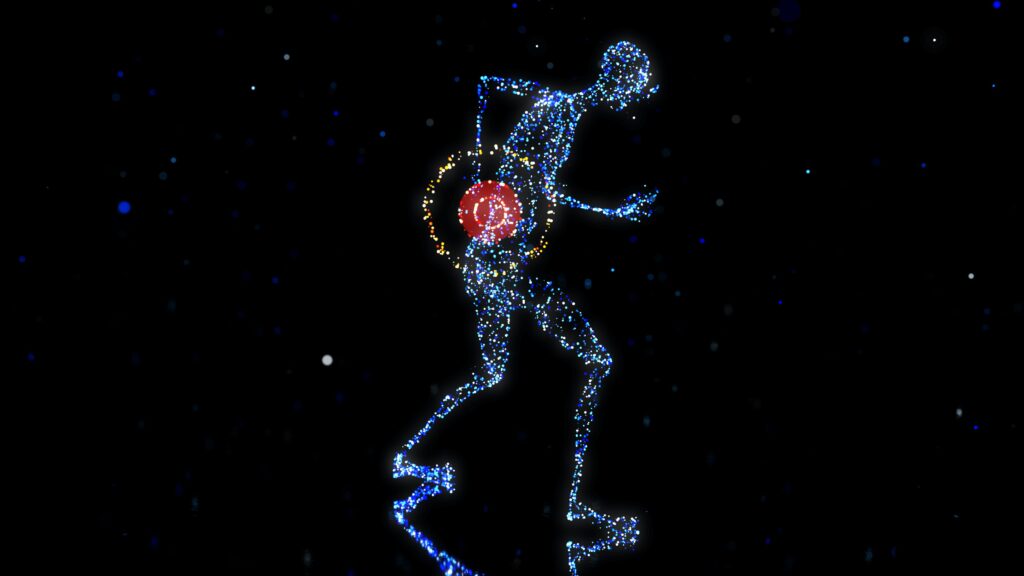
Photo courtesy of Rex Pickar

If you are tired of hearing about covid-19, I get it. I’m tired too. Isn’t three years of this pandemic enough? A brief look back into history justifies our frustration. The deadly 1918 influenza pandemic lasted only two years. Two! Going further back, the Plague of Justinian which killed millions lasted from 541-542. One year.

OK, I can hear my historian friends starting to grumble about selective facts and confirmation bias. I grant you the Black Plague lasted seven years. But it took place in the 1300’s, long before we had a scientific understanding of infectious diseases.

In these early years of the 21st Century we understand a lot about viruses. We know how to reduce covid’s spread. We have effective therapeutics for those who become infected. Nonetheless the pandemic persists. It is too early to look away. Especially for us seniors. While mortality figures have dropped substantially, hundreds of people in the U.S. continue to die from covid every day. Thousands get sick enough to require hospitalization.

It is notable that the proportion of covid-19 deaths among seniors is higher now – in 2023 – than at any previous time during this pandemic. In the first year 80% of covid deaths occurred in those over age 65. Today it is 90%. And seniors are being hospitalized at four times the rate of the general population.

Black and Latino seniors experience even higher mortality. In California, for example, covid deaths among Black seniors are about 30% higher than would be expected if deaths occurred equally among seniors of all races. For Latinos, covid deaths are about 80% higher. These differences have nothing to do with biology. They are due to social and environmental factors. People of color have less access to healthcare services. Their work and living situations often put them at disproportionate risk of acquiring this virus. And informed, relevant communication to communities of color about prevention and treatment options has been inconsistent.

*    *    *

Although opinions vary about many aspects of this pandemic, everyone agrees on one fact: covid hits the elderly the hardest.

Yet this basic truth has not led our society to follow simple, easy steps to counter the virus. A significant current of public opinion feels wearing a mask in public indoor spaces and staying updated on vaccines is asking too much. It is too big a burden.

Loud voices angrily denounce covid prevention measures. They shrilly push a political agenda, not public health policies. These voices mock expertise. Their subtext is clear: if covid is culling the herd, that’s not necessarily bad. After all, folks in their 70s, 80s, and 90s are close to dying anyway. Maybe the Social Security Trust Fund will last longer if we let more current recipients move on.

Thankfully, not everyone feels this way. But there is significant sentiment that the time for small sacrifices is over. Personal freedom and individual liberty trump community welfare. Especially the welfare of those who have lived in the community the longest.

Where does this leave us? With the clear understanding that when it comes to covid-19, boomers bear the biggest burden. And for many people this is just fine.

If I seem a tad irritated you are reading me correctly.

*    *    *

I acknowledge that seniors bear some responsibility for the increased problems we face from the pandemic. We have not all stayed up-to-date with vaccines. Not all of us wear masks while shopping. We sometimes go to indoor gatherings where unmasked people are milling about in close quarters. We need to be more careful. We need to be more cautious.

But I also want to ask folks of all ages to be more careful. More cautious. And more compassionate.

I have always put a premium on empathy. It is one of the most beautiful human traits. I try to understand where other people are coming from. But I am befuddled by why so many people seem unwilling to take small steps to help protect others.

When I’m in our local grocery store, three years into this pandemic, roughly 75% of the seniors and 2% of the young people are masked. People of all ages are coughing into their hands, sneezing at their sleeves, and standing close together in the checkout lines. This creates a covid playground.

I do not spend much time on social media. But when I read comments about covid on FaceBook or NextDoor, many say something to the effect of, “Leave me alone. If you’re afraid of the virus, then you can wear a mask.”

I know of several people in my age group who were themselves very careful and took all the right precautions. But they acquired covid from young adult family members who probably caught the virus at a party or a bar. The older family members became very sick, and I know of one who died. Of course the young people felt horrible. But their empathy arrived a little late.

I wish everyone would understand that when it comes to a still-lethal virus spread easily by respiratory transmission, we are all in this together. No one is an island. We are a community. And as a community, are we willing to tolerate losing the equivalent of a plane load of seniors every day? Are these deaths an acceptable cost to preserve some tarnished liberty?

Is it unreasonable to ask folks at low risk of complications from covid to think about others? To consider the health and the lives of those at higher risk?

Do old people matter?

*    *    *

If you enjoyed this post, please consider subscribing to be notified of future posts. Subscriptions are free.
Driving While Aging

January 2023

By Richard Fleming

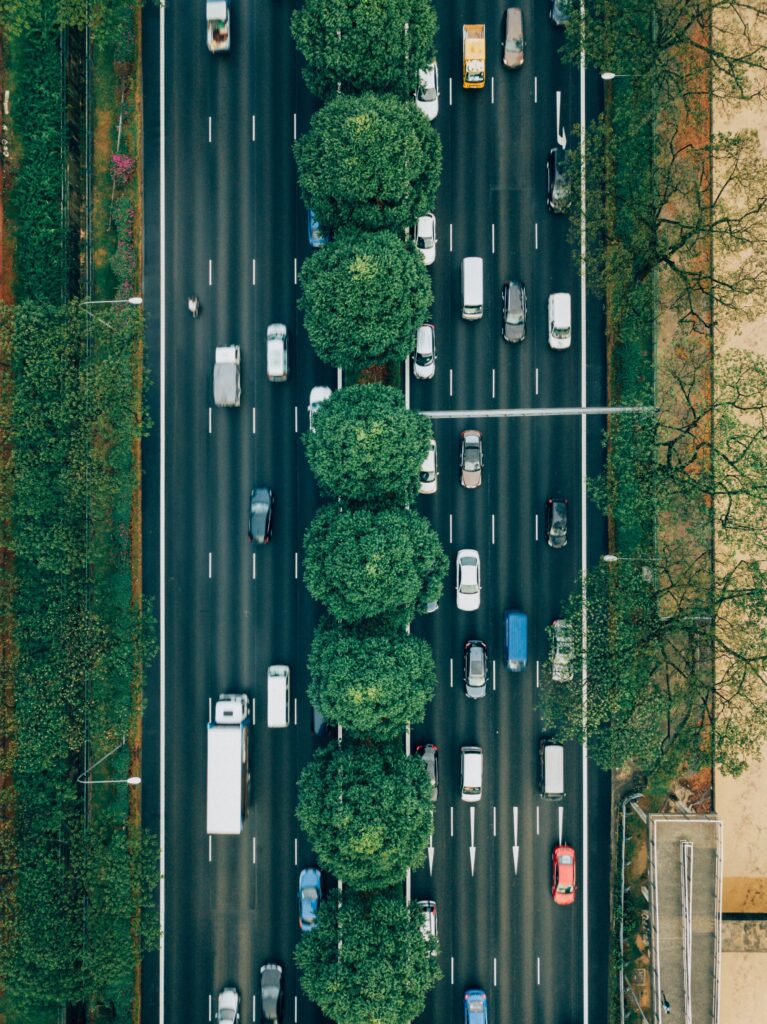
Photo courtesy of Chuttersnap

Driving a car these days is not what it used to be. The culture of driving has transformed. Getting behind the wheel feels more like a competitive video game than an exercise in safe transport. Driving a mile to the grocery store or 25 miles to visit the grandkids in Berkeley has become more Mario Kart and less SimCity.

When I navigate the roadways in 2023 I feel like a tortoise. Drivers routinely zip past. They cut me off at the last second to take an exit ramp. And they tailgate, even when I’m going 70 in the slow lane. I used to think right-of-way meant the car on the right had priority at a 4-way stop. I must have missed the memo when the DMV changed this rule. Now the youngest person at the intersection can dash through first. Right-of-way priority is determined by who executes the briefest rolling stop.

I am so nostalgic for the good old days when driving was a communal activity and we were all communards.

I can’t figure out what led to this change, which started 4-5 years ago. Early on, I assumed it was external factors. Perhaps driver ed classes had declined in quality. Maybe drivers didn’t realize how fast they were going because they were focused on their traffic-enabled, real-time-route-adjusting, fancy-colored-map GPS navigation systems with myriad streaming music options. Or they were caught up in multi-tasking, doing their IG (Instagram) while driving.

But I recently started to reconsider. I wonder whether the change may not be external. Maybe it is me. I don’t need a complete physical exam to know I am saddled with poorer vision, slowing reflexes, and a less flexible neck than five years ago. For much of my life, I considered senior drivers to be pokey, unsafe, risky specimens. Lo, I now meet the definition of being a senior driver.

Mind you, I’m not one of those fogeys who mosey along at 50 MPH on the freeway. I do maintain certain standards, after all.

But I tend to obey traffic regulations more carefully than I used to. Nowadays I rarely exceed the speed limit by 5 MPH, in town or on the freeway. After a few too many close calls with pedestrians in the crosswalks, my rolling stops have become primarily a historical phenomenon.

I have decided to accept the title of Mr. Tortoise as a badge of maturity. Maybe even of honor. I understand and recognize my role in the driving ecosystem has evolved. And that is why my car insurance payment is lower than my kids’.

My current approach to driving approximates Aesop’s story of The Tortoise and the Hare. I tootle along, ignoring the jackrabbits darting behind me, in front, and to my side. Let them risk life and limb. I’m on a mission. I have purpose. I motor down the road with confidence and assurance. I could care less about swooping in and out of traffic. I know the hares will run into the same number of red lights and stop signs as me. They’ll encounter just as many delays. They will find it impossible to avoid stopping at drive-through coffee shops. I much prefer consorting with the fellow tortoises in my bale than trying to emulate the denizens of a husk of hares.

Aesop’s conclusion in his fable was, “The race is not always to the swift.” I offer a slight edit: “The race is not always to the young.”

*    *    *

If you enjoyed this post, please consider subscribing to be notified of future posts. Subscriptions are free.
Celebrating Senior Moments

January 2023

By Richard Fleming

This post refers exclusively to the common mental lapses of aging. It does not apply to dementia. Dementia is a serious and sad disease that robs people of their identity and self. Many of us have family and friends suffering from dementia. I will write about this condition in the blog at some point, but now is not the time.

Photo courtesy of Jeff Sheldon

Senior moments are unfairly saddled with a bad rap. Brief memory lapses are common at all ages. But labeling them senior moments turns them into a source of ridicule. When a young person forgets a name or engagement, they are chucklingly accused of having a senior moment. Ha ha. When an older person forgets a name or engagement, people often comment with a wry smile, “You’re having another senior moment.”

But disrespect of senior moments comes to an end, right here and right now. I embrace my senior moments. You will see what I mean by the end of this post. And I hope you will come to value yours also. Senior moments can be cute. They are often endearing. And just because their frequency increases as our years accumulate is no reason to view them with disdain.

What causes senior moments? They are probably due to misfires in the electrical circuits in the brain’s hippocampus, where memories are stored. But these short circuits are momentary. Though I was not taught this in medical school, I envision a microscopic team of skilled electricians and cleaners busily reattaching loose wires and sweeping away the cobwebs which accumulate deep in our skulls. Our brain’s nimble repair people help us retrieve memories that are briefly misplaced.

Senior moments are delightful precisely because they are moments. Their duration is brief. Last week, I traipsed forgetfully down the length of the canned goods aisle at Raley’s Grocery Store. I then remembered I was seeking mayonnaise, one row over. See, it didn’t take long. I was at least in the general vicinity of where I needed to be. And I got in some extra walking. A month ago I spent several minutes wandering aimlessly around the dining room. I knew my journey had a purpose but could not recall what it was. Suddenly I spied a lone coaster on the dining room table. This prompted me to remember I had trekked to that room to retrieve the coaster. Mission accomplished. No harm, no foul.

Try telling me these episodes aren’t a bit charming.

Consider your own senior moments. That time you forgot a friend’s name, but remembered it just in time to avoid embarrassment. Or when you couldn’t recall who became president after Nixon resigned. You ended up remembering Gerald Ford pretty quickly, even though you had a small assist from Google. You have to admit these kinds of glitches are kind of cute. Certainly they should not be a source of ridicule.

Any day of the week, I prefer senior moments to senior hours, which I sometimes experience. Senior hours share nothing in common with happy hours, when bars put drinks on sale. They are unrelated to seniors getting discounts at movie theaters at specified times. Senior hours are prolonged memory gaps that take time to clear. Sometimes I cannot for the life of me remember the title of an enjoyable movie my wife and I streamed last week. Or where we went on vacation two years ago. And these missing data points can be difficult to retrieve.

I assume senior hours are due to the brain’s cleaning crew being overworked. Thank goodness they finally manage to make progress and the data I’m seeking resurfaces.

When I forget something these days, I hope it will be a senior moment. But there are times the data remains out of reach, and I simply give up and move on. Sometimes I even forget that I forgot something. If you know what I mean.

Senior hours are still uncommon for me. But they are not rare. I periodically do a mental self-check. How am I doing on Wordle this week? Can I at least get to the Solid Level on the New York Times’ daily Spelling Bee challenge? What was the title of the last book I read for my High Crimes Book Club at Bookshop Benicia?

Fortunately – so far – I appear to be passing my mental audits. But I do wish I could reduce my cleaning crew’s workload or beef up their staffing levels so that I have more senior moments and fewer senior hours.

I hope you now understand why senior moments, in their brevity, are a source of levity more than shame. Try not to forget that our senior moments are actually reasons for optimism.

And the next time some young smart alec condescendingly accuses you of having “another senior moment,” you can respond with confidence, “Hey, whipper snapper, thank goodness it’s not another senior hour.”

*    *    *

If you enjoyed this post, please consider subscribing to be notified of future posts. Subscriptions are free.
Bittersweet Twins of the Holidays

December 2022

By Richard Fleming

Photo courtesy of Kieran White

The end-of-year holidays are a time of joy. Family gatherings abound. Festive tables encourage gluttony. Crackling fires and warm blankets are an invitation to watch holiday classics on TV. Cold winds blow through the streets, and I shiver and smile when returning to the cozy warmth of home. Hot coffee tastes better on cold holiday mornings than at any other time of year. Joy is defined by our grandchildren running to the front door to deliver snug hugs while whispering, “I’ve missed you so much, Papa” and “I love you so much, Mama.”

Joy.

For the past 10 years, my wife and I have baked holiday goodies in mid-December and delivered them to the eleven houses on our home court in Benicia. When we deliver our treats, we are always repaid with neighborly smiles and thanks. This project was inspired by my mother. She made holiday cookies and cakes for our neighbors in Topeka when I was growing up. It felt like a nice tradition to continue.

This year we discovered our decade of holiday baking has become an ingrained part of our neighborhood’s culture. One neighbor, a lady who lost her husband two years ago, called us after Thanksgiving to say she would be spending the holiday in L.A. with her son, so we should not deliver treats to her in December. But she added she would be back home in early January just in case. Another neighbor asked in early December what we would be making for the neighborhood this year. He then smiled and said, “No pressure. If you don’t bake anything, that’s OK. But…” The comments of both neighbors made us smile. It is not a big project to make holiday goodies for our home court. And the fact it is a neighborhood tradition is satisfying beyond measure.

Joy. It rules the season.

But it is inseparable from its twin, whose name is sadness. As I grow older, I notice sadness plays a larger role with each holiday season.

Joy’s twin reminds me of my parents’ absence. The sights, the sounds, the aromas, the emotions of joyful childhood holidays are imprinted deeper in my brain than memories from random weeks in February or August. My parents were integral to my holiday memories for so many years, even long after I left home. It is during this time of year I feel their absence the most.

Yesterday’s joy is linked to today’s sadness. They are twins. Inseparable.

Joy’s twin also likes to murmur in my ear that my holidays are numbered. And its voice grows louder as each year passes by. Every holiday season is filled with warmth. But each one I cherish means one fewer ahead. The holiday season is too joyful to miss out on. But miss out I will. How many have I still? Four? Ten or twenty? Who can say? Who can know?

Today’s joy is linked to tomorrow’s sadness. They are twins. Inseparable.

As I age, it would be easy to let sadness overwhelm joy. Especially during the holidays. But I fight back. I struggle to understand the lesser twin. I have learned – I’m still learning – to spend some time communing with sadness. To know its depth. To not feel threatened or intimidated. Sadness abides, but does not ask me to forsake its twin. Rather, sadness illuminates the power of joy.

And so it comes to this. I accept that sadness will accompany the holidays. But I stand up for joy.

I think about my children and grandchildren living through another fun holiday season this year. They are creating and embedding their own holiday memories, which will grow richer over time. And my wife and I are integral to their joy. Our kids and grandkids will look back at the delicious feasts we prepared, and laugh at how they ate too much. They will fondly recall us awaiting them in the warm doorway, our arms extended, as they run into our tight embrace. They will remember us whispering in their ears, “I missed you so much” and “I love you so much.” And perhaps they will start neighborhood holiday traditions of their own creation.

Time will pass. Our children, and then our grandchildren, will themselves grow old. They too will experience the holiday seasons with an evolving mix of joy and sadness. My wife and I will be part of their joy. And we will be part of their sadness. Hopefully they will treasure the joy and come to understand that its bittersweet twin means them no harm.

*    *    *

If you enjoyed this post, please consider subscribing to be notified of future posts. Subscriptions are free.

Adventures in Home Repair

December 2022

By Richard Fleming

Photo courtesy of Cesar Carleverino Aragon

I’ve never been handy with tools. When growing up in Topeka, many of my friends learned how to build things and fix broken gadgets. Their parents taught them these skills. Usually their fathers. It was the early 1960s. Other kids my age learned how to replace door hinges. Attend to leaky pipes. Build small stools for their younger siblings to sit on while watching the old black-and-white.

But not me. I knew how to rake leaves. I could change batteries as adeptly as any young person. But anything involving tools was outside my realm. My parents preferred I focus on mental construction projects. When I had the option to take Mr. Huber’s Industrial Arts class (we called it “shop”) as an elective at Roosevelt Junior High, my parents made me take Art with Mr. Burgess instead. My friends in shop class learned how to use various and sundry tools. They produced small devices made out of wood and metal. Over in art class I learned how to apply random swaths of watercolor to blank pieces of paper. I have utilized the skills I learned in art class exactly never in the past 54 years.

To avoid any misunderstanding, I want to say I admire artists and I love art. Even watercolors. But I must also say my enrollment in junior high art instead of shop class has haunted me my entire life. Actions have consequences.

Over the years, my attempts at repairing broken doors, clogged drains, and malfunctioning toilet flush handles frequently went awry. My efforts to assemble beds from kits and install overhead racks in the garage were exercises in frustration. I usually succeeded eventually, after several trips to the hardware store for advice and strained wrists from using tools incorrectly. Each project took hours to complete, far longer than the instructions claimed.

As my age has increased, my adventures in home repair have become even more difficult. The obstacles are both physical and mental. My body no longer readily contorts into the posture needed to address a garbage disposal which has gone on strike. My neck objects to the prolonged hyperextension required to work on a recessed light fixture in the kitchen ceiling. What happened to the nimble fingers and flexible joints I possessed just ten years ago? When I was in my 60s.

But the cognitive challenges are more humiliating. I recently discovered that in the third decade of the 21st Century, you learn how to fix broken home fixtures by going to YouTube and searching for videos demonstrating how to proceed. When assembling home furniture kits you need to – listen to this – use your cell phone to scan a little square filled with weird dots which takes you to a video demonstrating what to do! Can someone please tell me how a video on a cell phone’s tiny screen can be the least bit helpful? Whatever happened to simple written instructions with clear diagrams? Honestly, I don’t mind putting on reading glasses to carefully read written instructions on large pieces of paper.

Last week I had to replace a broken spring in a dishwasher door. I dutifully searched for, then watched several videos on this subject. Each described the repair as an “Easy Fix!” or a “Simple 5-Minute Repair Project.” After 45 minutes alternating between trying to dislodge the broken spring and replaying the two most relevant videos, I was making little progress. My knees and ankles were threatening to report me to Adult Protective Services. The videos incorrectly assumed I knew the right tools to use. I just learned what an Allen wrench is one month ago. How can I be expected to know what a Torx screwdriver looks like?

My wife is patient with my difficulties restoring sick appliances and fixtures to good health. She suggested I call someone in to take over the dishwasher door repair job. I was on the verge of doing so when the broken spring popped out of the door (largely of its own accord) and went flying across the kitchen. This miracle allowed me to complete the project after an hour and a quarter.

If I had taken shop class in junior high, no doubt I could have finished this “simple 5-minute repair” in half an hour, leaving valuable time to work on my many pending mental repair projects. Don’t get me wrong, I loved my parents and they raised me well. Overall. But they misunderstood the importance of learning how to use hand tools.

*      *      *

Now that I’m in my 70s, I see more clearly that the chickens are coming home to roost. This phrase conveys two meanings and both apply to me. First, as most folks know, it indicates we must live today with the consequences of past mistakes. Or to put it another way, those who don’t take shop class in junior high are destined to be embarrassingly inept in home repair projects, and this problem worsens with age.

The second meaning may be more familiar to those of us who grew up on the Great Plains. When chickens come home to roost, they are returning to their shelter to rest and prepare for sleep. At present, I am fortunate to still have a fair amount of energy. And I have many projects yet to complete. But there is little doubt that I too am on the verge of coming home to roost.

*    *    *

If you enjoyed this post, please consider subscribing to be notified of future posts. Subscriptions are free.
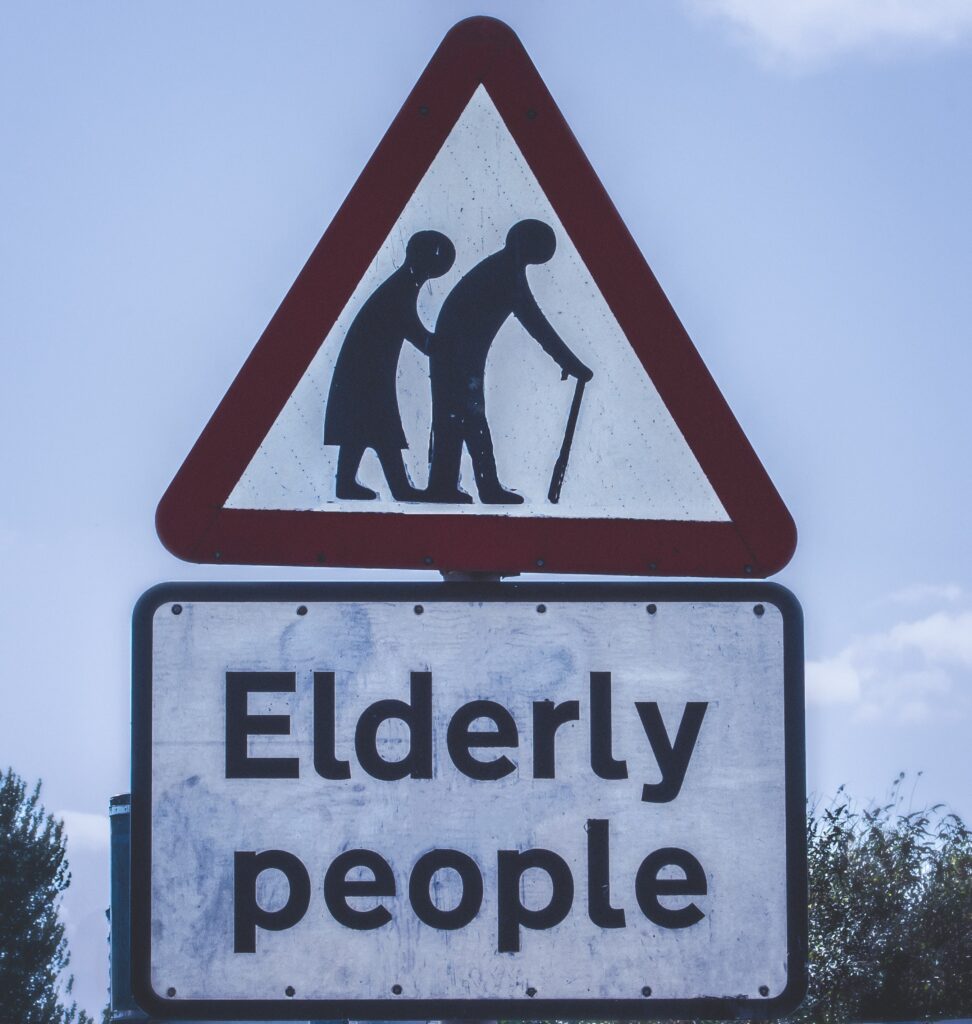
Old Age’s Stages

November 2022

By Richard Fleming

Photo courtesy of K. Mitch Hodge

There is a funny aspect to old age I did not understand until I suddenly found myself old. Not funny ha-ha, but funny strange. Old age is not a uniform period of life. We enter the land of seniority at age 65, but after that point we travel through three very different worlds. For the sake of simplicity – and we seniors benefit from simplification of ideas – I will refer to these stages as Early Old Age, Middle Old Age, and Old Old Age.

For every individual, the time spent in each stage varies. Some move through at a quick pace. Others linger in one stage before traveling on.

Early Old Age is the exciting period of one’s senior years. It generally starts shortly after retirement, when we are freed from the necessity of going to work. If we are fortunate enough to have good health, a reasonable financial situation, and a supportive family and community, Early Old Age can be quite rewarding. Energy and enthusiasm remain high. We can explore new opportunities. Schedules loosen up. A typical day might open with a slow coffee or tea while consuming the news. Those of us lucky enough to be grandparents often spend gratifying time babysitting grandchildren. The day’s errands and chores can be completed at a leisurely pace. Or they can be put off until tomorrow, since tomorrow’s schedule looks pretty wide open. Travel options expand. Opportunities for volunteer work open up. When our adult children mention how grateful they are for an upcoming three-day weekend, we can nod empathetically while silently reveling in our seven-day weekends.

But time marches on. After dwelling for a while in Early Old Age – perhaps just a few years, but hopefully a decade or so – we move into the Middle Old Age period. I feel I’m on the cusp of entering this second phase myself. Hallmarks of this time of life are both physical and mental. Our bodies begin to more clearly assert their limitations. Aches and pains in various and sundry locations become more common than in Early Old Age. Energy levels drop. Motivation flags. Home projects are harder to complete. Especially those we put off when our schedules were wide open in Early Old Age. Folks traveling through the second stage of old age come to realize if they have a doctor’s appointment next week, they don’t have time to clean the garage today. Tomorrow looks pretty dicey too. As for babysitting duties, we still love seeing our grandchildren… but folks in Middle Old Age find caring for rambunctious young humans to be more, shall we say, draining than previously.

Mental acuity diminishes. We forget people’s names more easily. We frequently go into another room for some reason, but after getting there we forget why. To do this once in a day may not be significant. But twice in one day confirms the diagnosis of Middle Old Age. And financial concerns often increase during this phase of senior living.

In Early Old Age, denial can be useful, even healthy. But Middle Old Age brooks no compromise and no negotiation. Aging’s reality sinks in like a 40 pound weight in a quiet pond. Or – resorting again to idea simplification – the Golden Years inevitably transform into the Fool’s Gold Years.

And then. No matter that we eat right and exercise. No matter how nice we are. Old Old Age sooner or later comes to embrace us with its firm hug. In this final stage of our senior years, physical and mental limitations dominate. Our time spent in hospitals and doctors’ offices expands exponentially. Medication trays become an absolute necessity. Our ability to travel, volunteer, spend time with friends, all rapidly taper. Instead of babysitting grandchildren, people living in Old Old Age are often the ones requiring babysitters.

This stage of life can be peaceful or painful. It can be serene or it can be stressful. Commonly, it can be a combination of all. Daily activities become restricted. We spend more time contemplating our legacy and what we will miss out on as our children and grandchildren grow up and grow old. And we start to wistfully look back on our years in Middle Old Age. Back when we could live life much more fully.

It is this prospect of living in Old Old Age that I find truly daunting. I hope when I stand in the doorway to that final phase, I will be able to look forward, breathe calmly, and enter gracefully into that uncertain land with a sense of peace.

But I tell you frankly I’m just not ready. And let me add that I’m not sure how I’ll ever get ready.

Wait. Let me not get ahead of myself. (That is the worst thing one can do while growing old.) As I mentioned before, today I stand on the threshold of Middle Old Age. The land I will be entering presents its own set of challenges. I struggle to accept what these coming middle years will bring.

Thankfully the door which will one day usher me into Old Old Age remains a distant image, closed and locked. But it is not a mirage.

*    *    *

If you enjoyed this post, please consider subscribing to be notified of future posts. Subscriptions are free.

Grumpy Old Man?

November 2022

By Richard Fleming

Photo courtesy of freestocks

I never imagined I would evolve into a crotchety old man. It was not on my bucket list and I’m fighting this archetype. The battle is joined, the outcome uncertain.

When I was young, I envisioned maturing into a suave, sophisticated, silver-haired older gentleman. This goal was wildly optimistic. Clumsy and awkward are better descriptors than suave and sophisticated. My hair is mousy gray, not silver. And I’m becoming a mite irritated with young people.

Apparently my struggle against becoming a cantankerous old guy continues.

In my own defense, my grouchiness is selective. There are many aspects of youth I admire and respect. Their energy. Their enthusiasm. Their curiosity. Their ability to lift heavy objects which would guarantee me a lumbar disc herniation if I attempted such a maneuver myself. I could not survive in the manner to which I am accustomed without the support and spirit of the young.

However. Young people uniformly manifest one of the most irritating traits known to humankind. In doing so, they defy longstanding precedent and the expertise of their elders. The persistence of this annoying habit may yet transform me into an irredeemably irritable senior citizen. If your year of birth precedes 1972, you know the negative attribute to which I refer. It is young people’s infuriating obsession with using their thumbs to type.

In case you are mystified by my irritation, let me explain. Please look down at your hands. Two of your ten digits are wider and thicker than the others. They have two joints. They are clumsy. They are called thumbs. Now observe the other eight digits. They have three joints. Their tips are thin. They are lithe and flexible. They are called fingers.

So far, so good. I’m trying to remain calm.

From time immemorial, there has been a division of labor between thumbs and fingers. Thumbs, intrinsically awkward, serve principally to stabilize the hand’s grip. Occasionally they engage with large objects, like the space bar on a keyboard. But they are too large to take on detailed activities independently. Fingers, intrinsically agile, are used for actions requiring dexterity and accuracy. There is a reason flautists avoid playing their instrument with their thumbs. The thumbs support the flute. They cannot create the music.

Another example. When reading War and Peace, we rely on our most discriminating finger to turn the 1,225 pages. The second finger is the most precise digit. Doctors refer to it as the index finger for good reason. The thumb can play an auxiliary role in turning pages, but the index finger takes the lead. Trust me on this. I passed anatomy in medical school in 1972. Human anatomy has changed little over the past half century.

OK. The structure and function of our ten digits has now been scientifically established.

Cutting to our current problem, young people decided some time ago to ignore the wisdom passed down from their elders and deploy their thumbs to the task of typing. And they do so on microscopic cell phone keyboards. Older and wiser folk opt to use their fingers – or more commonly their dominant hand’s index finger – to type slowly and carefully on cell phone keyboards. The results are wondrous. Few misspelled words. Punctuation is crisp and clear.

For young people, typing with the thumbs generates myriad problems. Misspelled words abound – “ur” instead of “your” or “you’re,” “n” instead of “and.” How does “to be honest” end up as “tbh”? And excuse me for asking, but what became of periods and commas in young people’s writing? Is capitalization a crime? My index finger never misses the period or comma keys. It never views the capitalization key as an inconvenience.

Truth be told, I long for the days of typewriter keyboards. Sixty words a minute was a snap. All ten digits knew their roles. Written words could be produced quickly, easily, and accurately.

But nostalgia holds a faint candle against the winds of change.

As I continue my journey, I pause to contemplate two diverging paths ahead. To pick one route means sticking with the world we older folks created. To take the other requires accepting that young people are creating the future.

Taking the first path will feel more comfortable, initially. But I fear I will become the grumpy old man I’m trying to avoid. If I choose the second path, I may feel awkward. But I will come to accept that young people are the ones constructing our new world. They are creating many new approaches to living and doing their best to solve the myriad problems we older folks created. If I am lucky, I may get to live in this new world for a while, as a calm older man. And I can try to help clean up some of the messes made by us older folks.

I hesitate a moment more. Which path will it be? The sun is coursing westwards and I must make my choice. Slowly at first, I place one foot in front of the other. My pace picks up as I decide to acknowledge the oncoming generation. It is time.

And this choice apparently requires I start typing with my thumbs.

tbh im jus sayin u no

*    *    *

If you enjoyed this post, please consider subscribing to be notified of future posts. Subscriptions are free.
Autumn’s Beautiful Uncertainty

October 2022

By Richard Fleming

Photo courtesy of Johannes Plenio

Autumn is a cautious time. A period of transformation. Nature presents its most vibrant hues. But it pauses to reflect on what was left behind, and what may lie ahead. It is a season of beautiful uncertainty.

Fall was always my favorite season, but I have taken it for granted for many years. Life was busy. Time in short supply. Autumn came and went, year by year, barely gaining my attention. And before I knew it another fall had disappeared. Year by year.

But now I find myself re-considering the magic of autumn. I am not sure why. Maybe it is because I’m more accepting of my post-work reality. I am fully aware I will no longer be ministering to the sick. The profession I spent so many years preparing for, and so many years practicing, is receding into my past. Or perhaps it is my increasing awareness the autumns ahead are numbered. Their appearances will not be few, I hope, but neither will they be bountiful. As I reflect on years gone by, anticipate the future, and audit my changing sense of self, I feel a need to recapture this precious season.

I am spending more time outside. I see changes unfolding with a different pair of eyes. This fall does not resemble those from the past. Why? Are my memories fraying? Is the way I perceive the world altered? Or is fall itself changing?

In our backyard, a pair of hummingbirds is intently drinking sap from the autumn sage. They are preparing to fly to parts south, hundreds of miles away. Will they make their journey safely? Will this same pair return next year? We have had hummingbirds for years. But this fall, for the first time, one started hovering outside our dinette window for long minutes watching my wife and I drink our morning coffee. Is it saying a final goodbye? Is it asking why we aren’t also preparing for the journey ahead?

The squirrels seem preoccupied this fall. They have long used the top of our back fence as a roadway, ambling from one side of the yard to the other at a leisurely pace. This fall the fence has become their superhighway. They madly dash from one end to the other as though time is short. Do they know something I do not?

The wisteria sheathing the arbor in our side yard is challenging my recall of autumnal transformation. It is continuing to bloom in purple beauty, even as the days grow shorter. This never happened before. Or is my memory leading me astray?

Then there is the honey locust we planted behind our house three decades ago. It is beautiful in the summer, though it starts dropping leaves in late August. By mid-September its branches are typically bare, before the birches and maytens shed a single leaf. This year its leaves began dropping in late August as usual. But two weeks later, the leaf fall ceased. The tree retained half its foliage for weeks before it finally resumed carpeting the patio beneath. Trees resonate with the world around them. Is the honey locust hesitant about what is to come?

California autumns are muted compared to those in Kansas, where I grew up. Fall in Topeka was heralded by thousands of elms and oaks, maples and sycamores, appearing to catch fire. In the Bay Area of the Golden State, the fall colors are less vibrant, but a vivid feeling of change is carried on the wind. The realization that summer’s passion is coming to an end cannot be avoided. And the gray, diminished season ahead is visible on the horizon.

As I enter the early years of my eighth decade, I live in the transformative days of autumn’s time. I look back and see the spring and summer of my life. Many pleasant seasons filled with growth and development. More accomplishments than mistakes, though there were full measures of each. I look around and see much to be thankful for. But there is also a looming sense of closure. When winter will come I do not know.

So I will immerse myself in my personal autumn. I will appreciate beautiful days with family and friends. I look forward to treasured time with my third grandchild, due in December. I will relish some great novels. I will spend more days traveling down the road, observing the trees, marveling at nature, contemplating the trail ahead. I will fondly recall the brilliant autumn colors of my youth and treasure the subdued autumn days of my present.

I am living with the beautiful uncertainty of growing old.

*    *    *

If you enjoyed this post, please consider subscribing to be notified of future posts. Subscriptions are free.

The Differential Calculus of Aging

October 2022

By Richard Fleming

Photo courtesy of thisisengineering-raeng

Scientists are gradually unravelling the mysterious biology of human aging. DNA becomes damaged. Cells lose their ability to replicate and repair themselves. Telomeres, the regions at the ends of chromosomes, shorten. But a confounding aspect of the aging process is that different organs and body parts grow old asynchronously. Some age more rapidly. Others more slowly. For each person, the differential aging speed of body parts varies.

According to my birth certificate, I am 71 years old. But I am made up of various components. Each regularly communicates with my brain. Some proclaim their youthful vigor and demand gratitude. Others ask for accommodations because they are older. Juggling these competing claims can be challenging.

Two of the oldest parts of my body are my ears. For all intents and purposes they are pushing 87 years old. They disdain and dismiss the rich world of sound encircling me. And they try to distract me with a constant hissing noise. They insist I lower my expectations for auditory enrichment and demand I provide them hearing enhancement devices.

My eyes, myopic and with increasing floaters, celebrated their 75th birthday when my birth certificate said I was in my 50s. But thankfully, and for no apparent reason, the premature aging slowed. Their performance level stabilized, neither improving nor diminishing further. They now appear to be biding their time until the rest of my body catches up. What my eyes will choose to do when I officially turn 75 is anyone’s guess.

My right first toe is far older than its nine compatriots, thanks to a 50 pound marble table slab doing a header on that toe many years ago. (Please don’t try to replicate this maneuver at home.) A broken bone and damaged nail bed will definitely accelerate the aging process. For the most part, the other nine toes tolerate the older digit. But some days their patience wears thin, at which point I have no option but to sit down.

On the other side of the ledger, my mouth and tongue remain quite youthful. They relish good food and drink as much now as many decades ago. Truth be told, I sometimes wish they would age a bit more quickly. But they are living life on their own schedule and their enthusiasm requires I spend more time on the elliptical in the garage.

Some organs are reticent about proclaiming their age. My heart, for example, has diligently performed its duties for 71 years with no significant protestations or announcements. My best guess is that it is about 55 years old. But who knows? Tomorrow it may divulge its age is 80. I’ve never been one to object when people or body parts are bashful about revealing their true age. I prefer to let sleeping dogs lie rather than wondering who let them out.

I could offer an inventory of other body components, but doing so would quickly devolve into the swamp of TMI. Suffice it to say my birth certificate does not accurately capture the differential calculus of my aging body.

*    *    *

One arena of variability in bodily aging holds greater importance. It first came to my attention when I was in practice. My older patients often reported their surprise when they looked in the morning mirror. In their brain they felt they were 30 or 40 years old. But the mirror told them they were 70 or 80.

In my early years of practice, I sympathized with these patients. I blithely reassured them this disconnect between mind and body was common to aging. Sympathy was easy to express when my personal experience with the mind-body discrepancy was limited. But as my years in practice accumulated and I traveled further down the road, my approach began to change. I stopped sympathizing with my older patients and began empathizing with them. Empathy more accurately expressed my resonance with my fellow travelers.

Sympathy can be hollow, pro-forma. Empathy is genuine, heartfelt. When it comes to understanding aging, sympathy and empathy are separated by the date engraved on our birth certificate.

In an ideal world, perhaps human aging would be better coordinated. Each organ would grow old in synchrony and harmony with every other. But, as reality clarifies for us on a daily basis, we live in a less-than-ideal world.

If I could choose one organ to age more slowly, it would of course be my brain. I would like to preserve my ability to converse with my grandchildren in a stimulating way for years to come. I would like to listen to great music in the 2040s, wearing hearing aids of course. I want to be able to read poetry, even when my knees will no longer let me stand.

But there are downsides to a 40 year old brain inhabiting a 90 year old body. The brain’s understanding of what lies ahead grows increasingly bittersweet and profound. While opportunities for living remain, the frame of time is visibly shrinking. Some potential persists, but much potential is lost.

As we trudge forward, our powers of clairvoyance improve. We gain the ability to predict our future. We come to know that full synchronization between our brain and our various body parts lies ahead. When that time comes, our birth certificates will gain precision. And the differential calculus of growing old will confound us no more.

*    *    *

If you enjoyed this post, please consider subscribing to be notified of future posts. Subscriptions are free.

Choosing to Grow Old

September 2022

By Richard Fleming

Photo courtesy of tawatchaiprakobkit

Despite my age, or perhaps because of it, my understanding of what it means to grow older is evolving. I will open by deconstructing this phrase. Growing means developing, expanding, increasing in size or substance. Older means more advanced in the years of life.

Growing older is best understood contextually. In my youth, I embraced it enthusiastically. Growing older meant a driver’s license. Voting. College. Marriage and family. An interesting field of work. Travel. For the young, growing older is aspirational.

But youthful exuberance carries an expiration date. At some point in each of our lives, growing older loses its luster.

For me, this transition happened in my 50s. The idea of growing older became daunting. Turning 60 or 70 was less appealing than turning 20 or 30. Further, I failed to understand how people could grow old. Aging seemed the antithesis of growing. People became old. We attained old age. Actually, as we aged, growing ceased, replaced by diminishing. Diminishing height, stamina, cognition and, importantly, skin texture and elasticity. Our bodies may expand and increase in size or substance, true that. But aging seemed more a process of running down than of growth.

I formulated two theories to explain the fallacy of linking the concept of growing to aging. First, perhaps the term growing old arose from an unintentional mistranslation of Old German root words many years ago. Or second, it was intentionally developed as an ironic device to insure senior citizens know we are no longer evolving in a positive and useful way.

Fortunately my ability to learn and adjust persisted. As I reached my 60s, my understanding of aging continued to develop, thanks to lessons from those older and wiser than me. I reflected on the fact this phrase, growing old, has been in widespread use for centuries. Its longevity suggested it rested on a solid foundation. Was there a path that could help me understand that aging is – scientifically speaking of course – a growth process?

*    *    *

During decades of family-building and work, one’s time is constrained. While they are years of growth, they are also years restricted by sturdy fences. The highest level action items are helping one’s family and contributing to the Social Security Trust Fund by remaining gainfully employed. Other activities rank lower on the priority scale.

As people attain higher levels of seniority in the job of life, their energy and fortitude lessens. Multiple well-performed medical studies offer confirmation.

But – assuming their health allows – people also have more freedom. Barriers which delimited family and work responsibilities become weathered and worn. Some of the fencing collapses. And new vistas emerge.

I thought back over my years practicing medicine and recalled many of my elderly patients becoming first-time photographers, book club members, overseas travelers, knitters, exercisers, community volunteers. They became mentors to troubled youth, part-time teachers, learned new cooking skills, got politically involved, took online courses to learn about medieval history or modern art.

Objective scientific assessment could only conclude these elderly people were growing. And, yes, they were growing older.

Unfortunately, not all senior citizens embrace the opportunities which open as the years accumulate. Some are unable to because of physical limitations. But others opt to rest after many decades of hard work. Or they prefer to dwell in the seductive lands unspooling on television and social media. They are getting older but not growing older.

*    *    *

I continue foraging  down the path. Day by day, step by step. As I do so, I have learned what lies ahead is not strictly a process of simple subtraction. The equations of my future years can incorporate the process of simple addition.

And this is already underway. Since retiring, my wife and I travel more. We volunteer for Meals on Wheels. Spend more and better time with our grandchildren. Are active in voter turnout efforts. We gave Covid-19 vaccines at a local community clinic for six months. I teach medical students. Exercise more consistently. Joined a city commission on sustainability. Started a blog.

Of course some growth activities remain off limits. I refuse to sign up for art appreciation classes. Learning to crochet is not on my bucket list. Ballroom dancing is a dicey proposition because I would like to avoid fracturing my wife’s foot bones. The jury is still out on pickleball.

But novel opportunities abound. My challenge is to pick wisely among them.

Thanks to my fellow travelers, I have come to understand that whether to get old is not a choice. Whether to grow old is.

*    *    *

If you enjoyed this post, please consider subscribing to be notified of future posts. Subscriptions are free.

« Older posts Newer posts »

© 2026 Older But Wiser

Theme by Anders NorenUp ↑