Observations While Traveling Down the Road of Aging

Category: Aging (Page 8 of 8)

The Compression of Time

September 2022

By Richard Fleming

Photo courtesy of Tasos Mansour

An unusual feature of aging is the rapid acceleration of time. Each year goes by quicker than the preceding one. And much faster than those we lived through 5, 10, and 20 years ago. Astrophysicists advise us that time is not a fixed concept. As an object accelerates and approaches the speed of light, time slows down. And conversely as that object slows down, time moves more quickly. So it should not be surprising that for humans too, as we grow older and our rate of speed slows down, time speeds up. It is just basic astrophysics.

In my early years of practice, older patients often told me about this phenomenon. Most presented it as a complaint, a discriminatory experience. People in their 70s and 80s said how unfair it was that time accelerated as they aged. Time should be prolonged, not abbreviated. I sort of understood what they were reporting, but it did not really hit home until I was around age 50. After I had accumulated a half century’s worth of living, I began to notice this basic principle of astrophysics applied to me also. The interval between major holidays appeared to shorten. The time between birthdays shrunk noticeably.

Seasons began to fly by. In the old days, autumn – my favorite season – would shape the land for three months or even longer. When I was young, I loved to be outside as the temperature gradually cooled and leaves lazily turned to red and gold. Trees slowly shed their ornaments, and birds I had seen throughout the summer flew off and away. My friends and I played touch football in Topeka’s Edgewood Park, a short walk from where we lived, and the games seemed to go on for hours. Dusk gradually came earlier, but each day lingered for hours.

As I grew older, I noticed autumn growing shorter. No sooner did I start enjoying the magical fall transition than it was over. Trees grew bare quickly. The world assumed the gray hues of winter before autumn even matured. Time accelerated before my eyes. In grade school, an autumn weekend day would last forever. Now that I’m in my 70s, these same days vanish before I even take a deep breath.

There are other ways to understand the startling compression of time as we age. For example, when I took American history in high school, the country’s existence seemed to extend back for centuries. Because that was actually true. So much had happened. We studied our country’s major military conflicts, including the Revolution, the Civil War, and two World Wars. These conflicts were meaningful parts of our history, even though they were so ancient.

But aging casts the unspooling of history in a different light. I recently realized I have been alive for 29% of the total time the U.S. has existed. I have been breathing, living, and walking the earth for well over one quarter of the years since the country’s founding. (Am I being optimistic or pessimistic if I round this off to about one third?) I’ve been alive 45% of the time since the Civil War. That is close to half! It turns out the Civil War did not end all that long ago. OK, since I’ve piqued your curiosity, I’ve been alive for 68% of the years since the end of World War One. Don’t even ask about World War Two.

What happened? Where did time go? There are so many things I’ve been intending to do. I need to face the reality I won’t have time for them all. So many books will go unread. Those novels incubating in my brain will go unwritten.

I’m not full of despair, though. Not at all. I have done many things, seen many places, and read many books. I had a rewarding career. I’ve maintained many friendships, including a group of friends from Topeka I’ve been close with for over 60 years. I’ve been a good husband, step-father, and grandfather, and am proud of the family I’ve been part of building.

But there is always more. Always so much more. Why didn’t I manage my time more efficiently? Why didn’t I listen to those wise elders who told me a few decades back to not wait on things I wanted to accomplish. Or did they offer that advice just a few years ago? Time is amorphous, unstable, illusory. Clocks try to fool us. Calendars are deceptive and dishonest. Wristwatches are liars and cheats. Trust me when I say that none of these markers of time can be trusted.

So what lessons can I draw? While I wish my years ahead would be more and longer, I am where I am. Aging is helping my ability to focus. I will concentrate on fewer, more meaningful goals. I have months and years ahead and much life yet to live. I have memories still to create, both for myself and my family. And when my time comes, these memories will be the main legacy I bequeath to my family and loved ones.

Yes, it would be nice if time would slow down as though I was approaching the speed of light. But it can be fulfilling and rewarding to live fully at the speed of life.

*    *    *

If you enjoyed this post, please consider subscribing to be notified of future posts. Subscriptions are free.

Middle Age in the Rear View Mirror

August 2022

By Richard Fleming

Photo courtesy of Charlie Deets

It may seem strange, but I feel I missed middle age. What happened? Where did it go?

I’m 71. For most of my life I have felt fairly young. I have been full of energy and confidence. Life was rich with possibilities. Middle age always seemed a nebulous concept, off in the distance. It was the gateway to old age, and I certainly did not feel I was approaching that threshold. Middle aged people lacked energy and mental acuity. This was not how I saw myself. While I didn’t spend a lot of time dwelling on precisely when middle age started, it always seemed to be five or ten years beyond my age at the time.

When I was in my thirties, middle age seemed to apply to those 50 years old and above. In my mid-forties, I still possessed vim and vigor. I assumed middle age would probably hit in my early fifties. But when I reached my early fifties, I certainly did not feel middle aged. It seemed middle age might drop onto my shoulders when I hit 60. You know, the age when folks often start having more aches and pains. When they become less sharp and snappy. But when I made it to 60, I still did not feel middle aged. I was blessed with good health and an active mind. I did not feel I was standing on the threshold of old age, and decided middle age must start around age 65.

It was when I applied for Medicare shortly before turning 65 that the erosion of the brick wall of denial began to accelerate. I looked in the mirror and the marks of a long life, well lived, were etched permanently on my face. My stamina remained reasonably intact but I noticed yard work was more taxing. It was increasingly hard to think of myself as a mature 50 year old. Reality forced me to accept I had finally left the realm of youth. And decisively so. My Medicare card brooked no equivocation. My game of dodge ball was over.

And I began to see increasing instances of newspapers and other media identifying “seniors” and “the elderly” as those 65 and above. Sometimes even 60 and above!

Truth became even harder to avoid when the covid-19 pandemic hit. In discussing risks from covid-19, news sources identified those 60 or 65 and above as being at highest risk of complications. This age group – my age group – was being labelled by physicians and epidemiologists as elderly! Wait, I wanted to shout. How could members of my own profession, physicians, betray me in such cavalier fashion? I was just beginning to accept that I might be entering middle age. Was I expected to suddenly, with no advance warning, accept being viewed as a senior citizen? Something was desperately wrong here.

As I reflect back on why I missed middle age, I think it is because the idea of middle age gets precious little respect. Youth is a valued concept. Young people are full of energy and potential. They enjoy their lives with few limitations. They are the engines of our culture, society, and politics. They are the genesis of our future.

And as far as seniors are concerned, they too are treasured in many respects. They are solid and stable. They serenely carry the weight and responsibility of history. Sometimes they are viewed as wise. And they are exempted from many societal responsibilities, like working, building families, and paying into the Social Security Trust Fund. They even get discounts at movie theaters.

But middle aged people? For too long, I thought they had little value. They had lost the virtues of youth and were yet to acquire the dignity of the elderly. They lingered precariously at the gateway between youth and old age, looking wistfully back at a past which cannot be reclaimed. And yet they were also not eligible to apply for the benefits and respect accorded the golden years. Who would want to claim the mantle of middle age?

But wait. Now that I am an officially-certified senior citizen, I feel much more positive about the virtues of middle age. Those inhabiting this oft-neglected stage of life’s journey survived the impetuosity and risk-taking of youth. And… they are not yet elderly. Though senior citizens are intrinsically virtuous, there are unavoidable downsides to the golden years: mental and physical frailty, financial insecurities, constricting social circles. And a dwindling desire to take advantage of senior discounts at movie theaters.

I have now decided I was wrong to view middle age as the crazy uncle in the attic. Each time of life is precious and should be cherished, even middle age. In fact, I’m beginning to consider claiming the identity of middle age for myself. Just as the entry point into the middle years is poorly defined, the exit point of middle age is also murky. Maybe I’m not too late.

But no, this would not be a viable claim. It’s time – nay, it is past time – to accept my station in life. I am unavoidably, irretrievably, irredeemably, old. I need to come to terms with this reality. Middle age is receding in my rear view mirror.

Who knows, maybe I’ll set a stretch goal. What if I move beyond tolerating being old to actually embracing this stage of life? Many of my elderly patients were able to do so. Why shouldn’t I?

Therein lies my challenge.

*    *    *

If you enjoyed this post, please consider subscribing to be notified of future posts. Subscriptions are free.
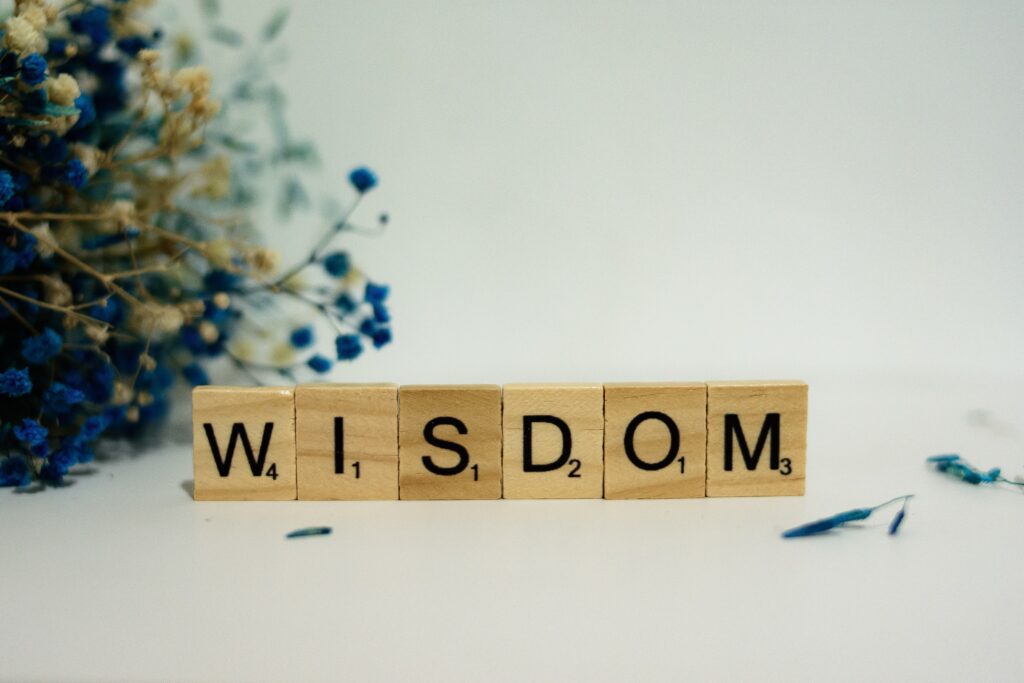
When Will I Know What They Know

June 1993

By Richard Fleming

Photo courtesy of Alex Shute

Among my tasks as a doctor are helping the elderly come to terms with the limitations of old age, and assisting terminally-ill patients and their families to accept death. Patients and family members tell me I am good at this. I discuss “No Code Blue” designations (orders not to take extreme measures to resuscitate a patient in case of cardiac or respiratory arrest) and make sure affairs are in order with an appropriate mix of compassion and objectivity.

Lately, though, I have begun to feel like a hypocrite. My words of comfort to the aged and dying sound increasingly hollow. Even as I speak them, my reassurances are contradicted by a small voice inside my head saying, “Fool! There is nothing good about growing old. Aging gracefully? Hah! What rubbish! And death. Who would ever be ready to die?”

The days go by, and I continue to carry out my responsibilities as a physician, but a weird role reversal has taken place. Probably no one else sees it, but I am now the one seeking reassurance from my elderly patients that it is OK to grow old and there is nothing to fear from death.

Why, I ask myself, has this issue become a concern for me now? After all, I am only nine months into my 42nd year and my health is good. So why now? Maybe this is part of the notorious midlife crisis, a phrase I have always despised.

Yet that is where I find myself – halfway through. Though not consciously planned, I find myself reflecting, thinking about the goals I have met, the goals I haven’t met, and those goals I never set. It is a time for taking a personal inventory, to examine the good and the bad. A successful career. But maybe I could have done better. Some good friends, yes, but not as many truly close ones as I would like. No major medical problems, as far as I know, but aches and pains are more persistent.

Time accelerates every more rapidly; each year is shorter than the one before. I fear I will never reach the point where I have lived enough of life that I will be at ease with letting it go. It seems too difficult a challenge. Life is so rich with color and meaning and potential – how can aging and death be anything other than premature?

Anxiety would overcome me if it was not for my daily interactions with the elderly, those time travelers who have reached their 70s, 80s, and 90s. In what appears miraculous fashion, they counter the indignities of old age with dignity. I don’t mean this to be patronizing, but the vast majority of the elderly I work with seem so pleasant, so even-tempered, so calm. Whatever rough edges they may have had in the past – selfishness, insecurity, anger, despair – have often been smoothed away by time.

It is not that the elderly have such easy lives. Many face chronic medical problems, financial insecurity, loneliness, and isolation. And it is not that they look forward to further aging and to death. But they seem to have reached an accord with life and the inevitability of death that is beyond the reach of those who are younger.

“When death comes, it comes,” said a 78-year-old retired carpenter.

“I don’t know, I guess I’ve lived a pretty full life, and I’m ready for whatever comes,” said an 83-year-old with four children, seven grandchildren, and great-grandchildren too many to count.

I am baffled by these sentiments. Don’t these people understand what they are saying?

What accounts for how readily the elderly consent to their terrible predicament? This acceptance encompasses both the healthy and the sick, the religious and the nonreligious, those with strong networks of friends and family and those without. The answer is not to be found among these characteristics. Instead it seems intrinsic, something acquired by virtue of having lived for so many years. It is as though the elderly have crossed into a foreign land, a strange world where the requirements for citizenship include a birth date before 1920 and a quiet understanding of the realities of life and death.

I long to know this mysterious world and, I confess, it is not so that I can be a better doctor, but for reasons very selfish and personal. In my encounters with my elderly patients, I carry on as before, but with a new, hidden agenda, a desire to understand the world they inhabit. My questions to them sound no different than before.

“How are you making out at home with that new walker, Mrs. Peterson?”

“Well, Mr. Sandberg, have you given any more thought to that talk we had last visit about moving into the nursing home?”

But what I strain to hear are not merely the responses to my questions but something more. I seek clues to the puzzle of why the elderly are so accepting of themselves and how this came to pass. In so doing, I am really looking for something inside myself, some aspect of my personality or some experience that will allow me entry into that land of mystery.

I suppose I could be patient and dutifully await my turn. At age 70 or thereabouts, I will somehow acquire a visa providing admission into the nation of the elderly.

But I don’t want to wait! I’m insecure today and want to understand now. I want my own rough edges rounded off. Why can’t I cheat time? Why should I have to wait another 30 years to know my fate?

My next patient awaits. It’s Mrs. McCarthy, an 84-year-old diabetic with a heart condition. Maybe she will have the answer. Maybe she can provide me what I need, reassurance that I too can embrace the coming years of tempered expectations with some degree of peace.

*    *    *

If you enjoyed this post, please consider subscribing to be notified of future posts. Subscriptions are free.

Newer posts »

© 2026 Older But Wiser

Theme by Anders NorenUp ↑